That Facial Match Score Is Lying to Your Face
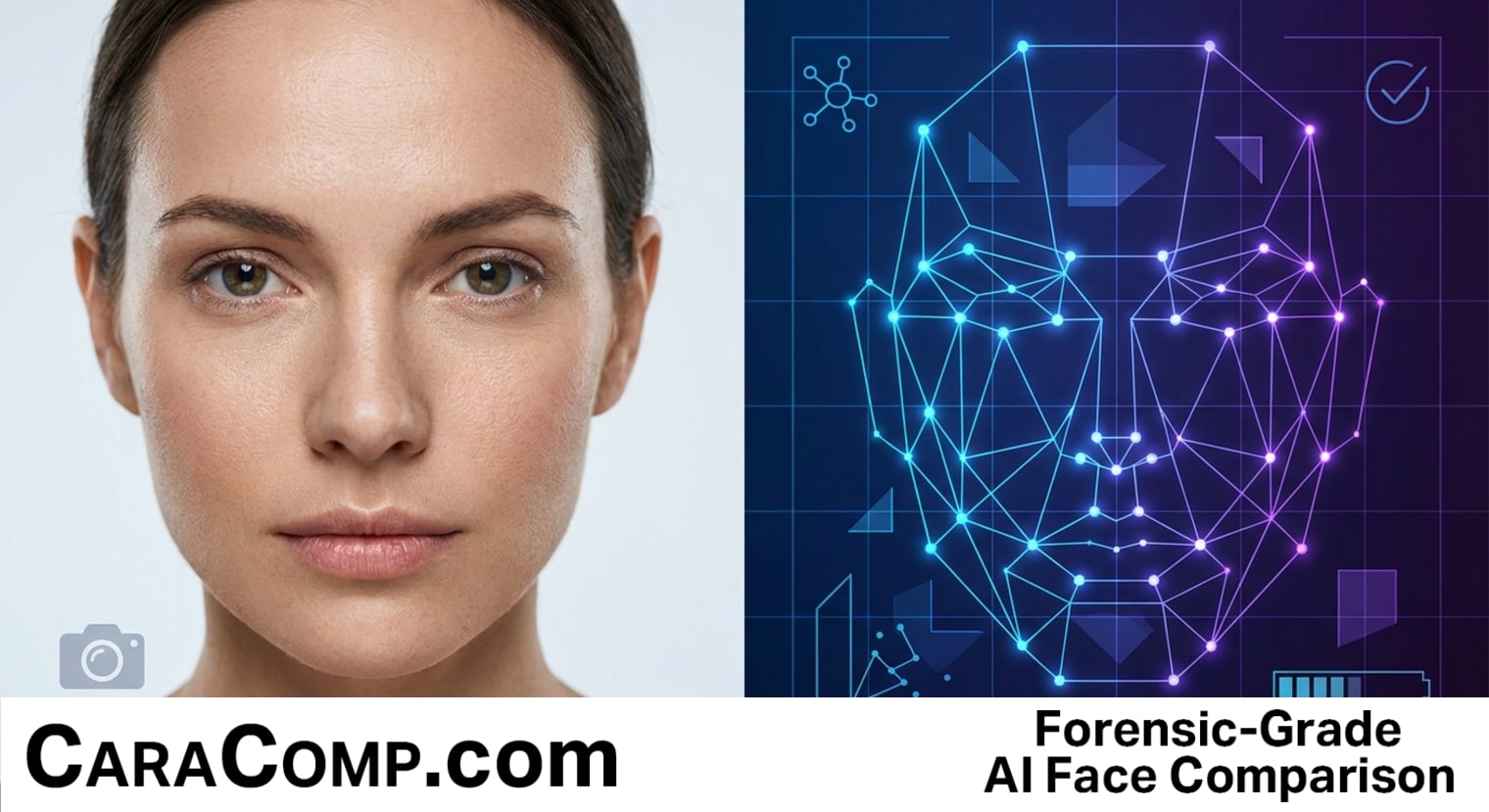
If you are staking your professional reputation on a "95% match" score without understanding Euclidean distance, you are playing a dangerous game with your client’s trust. Most investigators look at a facial comparison result like a grade on a test, but in the world of high-stakes OSINT and private investigation, that number isn't a verdict—it’s a measurement of 128-dimensional geometry.
The reality is that your eyes are evolved to recognize patterns, but modern investigation technology is built to calculate math. When you upload a photo to a tool like CaraComp, the system converts that face into a string of numbers. The "match" you see is simply the mathematical distance between two points in space. If you’re still spending three hours manually squinting at grainy surveillance footage to "see" a resemblance, you aren't just wasting time; you’re falling behind the technical curve that separates the pros from the amateurs.
For the solo investigator or the small firm, the "identity gap" has always been about access. For too long, the ability to perform precise Euclidean distance analysis was locked behind enterprise contracts costing thousands of dollars. We’ve changed that. You don't need a federal budget to use the same math as a three-letter agency. You just need to understand that a match score is only as good as the alignment and detection pipeline that created it.
As we move further into an era of synthetic media and sophisticated fraud, the implications for your caseload are clear:
- Math beats "gut feelings" in court: Presenting a professional report based on 128-point vector analysis is defensible; saying a suspect "looks like" a photo is not.
- Occlusion is your biggest enemy: When a subject wears a hat or glasses, it doesn't just hide their face from you—it corrupts the mathematical "address" the algorithm creates, meaning you must validate the environment, not just the score.
- Enterprise-grade analysis is no longer a luxury: High-level facial comparison is now accessible at 1/23rd the price of legacy tools, removing the excuse for using unreliable consumer-grade search engines.
Stop guessing and start measuring. If you aren't using batch processing and professional comparison reporting, you’re leaving your case results—and your reputation—up to chance.
Read the full article on CaraComp: That Facial Match Score Is Lying to Your Face


Comments
Post a Comment