One Frame Fools You. Three Frames Catch the Deepfake.
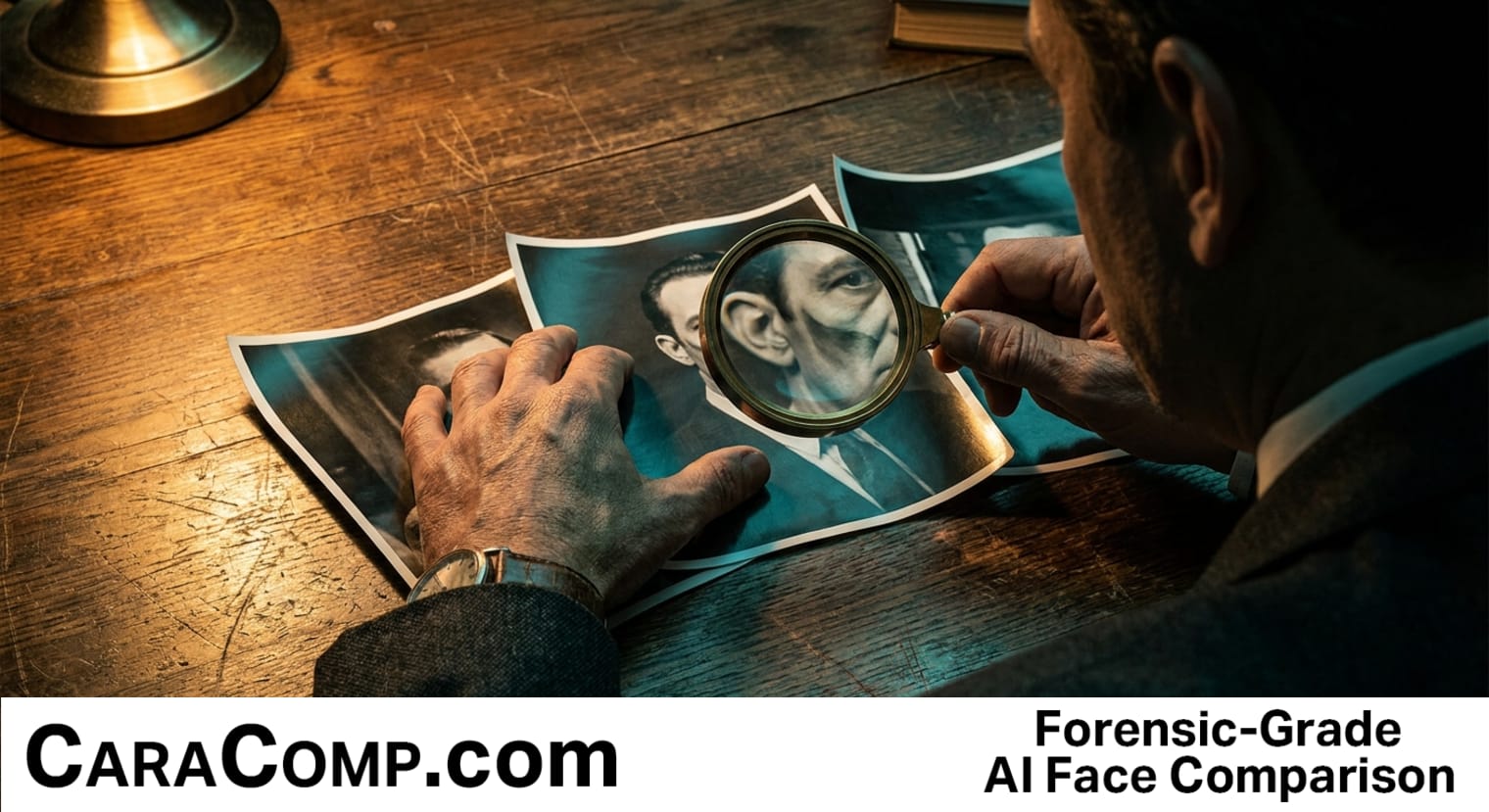
If you’re still squinting at a single image to spot a deepfake, you’ve already been compromised. The unsettling reality of modern synthetic media isn’t just that it’s "getting better"—it’s that in a single, high-resolution frame, it is now often mathematically perfect. Those visual "glitches" we were taught to look for five years ago—the blurry edges and flickering shadows—have been ironed out by advanced generative models. Today, the only way to expose a digital counterfeit is through identity consistency analysis across multiple angles.
For the solo private investigator or OSINT researcher, this is a massive wake-up call. Your reputation is built entirely on the accuracy of your identifications. If you are still relying on a "gut feeling" or unreliable consumer search tools to verify a subject’s identity, you are gambling with your professional credibility. The forensic anchor has shifted from pixel quality to identity stability. This is why facial comparison—true, side-by-side analysis—is becoming the most critical weapon in an investigator’s arsenal.
By utilizing Euclidean distance analysis, we can now measure the subtle "identity drift" that occurs when a synthetic face turns ten degrees or shifts its jaw. These are biomechanical inconsistencies that a human eye might miss during a three-hour manual review, but that data-driven comparison catches in seconds. While federal agencies have used these methods for years behind six-figure paywalls, the technology has finally leveled the playing field for the small firm. You no longer need a government budget to prove a frame is a fraud; you just need the right math.
- Single-frame verification is now a liability, not a methodology. If your evidence doesn't hold up across a sequence or batch of frames, it will be dismantled under cross-examination.
- The "Ear Anchor" remains the investigator's best friend. While deepfake creators obsess over eyes and mouths, they often ignore static features like ear geometry, making them the primary points for Euclidean comparison.
- Affordable batch processing is the only way to scale. Manually comparing frames for identity drift is a recipe for burnout; the future belongs to investigators who automate the math while they focus on the case strategy.
We are entering a phase where "seeing is believing" is a dangerous myth. The sharp investigator knows that the truth isn't found in a single photo, but in the mathematical consistency between them. If you aren't comparing, you aren't investigating.
Read the full article on CaraComp: One Frame Fools You. Three Frames Catch the Deepfake.


Comments
Post a Comment