Investigators Can't Explain Their Own Facial Recognition Evidence. Courts Noticed.
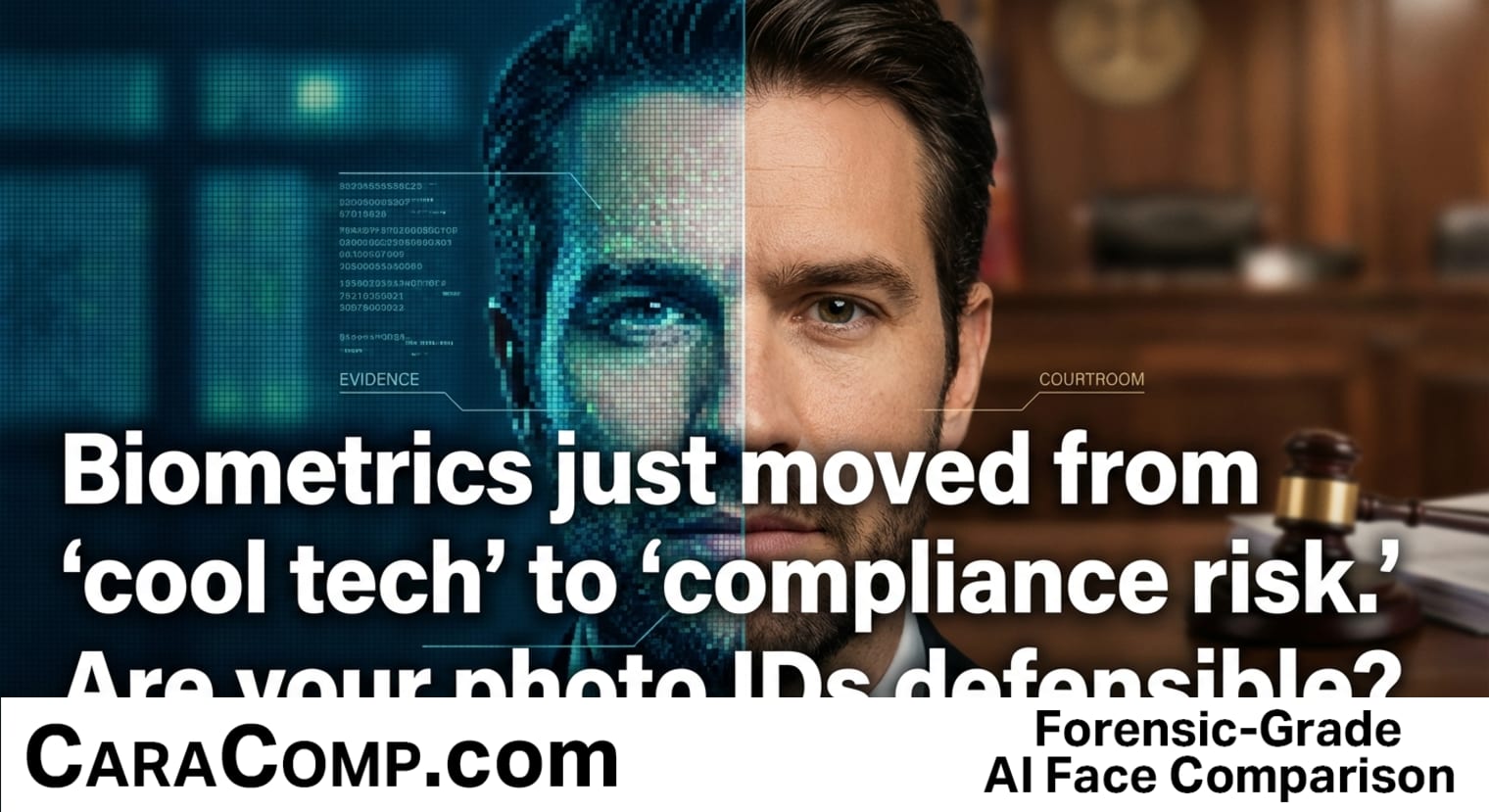
Stop pretending your "expert eye" is enough to hold up in a modern courtroom. Recent legal shifts have made one thing clear: if you can't explain the mathematical methodology behind your facial comparison, your evidence is a liability. For years, solo investigators and small PI firms have relied on manual visual checks or questionable consumer-grade search engines. Those days are over. Courts are no longer asking if you matched a face; they are asking for the specific Euclidean distance analysis that proves it.
The recent UK Supreme Court ruling and shifting standards in the U.S. highlight a terrifying gap for the independent investigator. We are entering a period where failing to use available biometric tools is considered professional negligence, yet the enterprise tools required to meet these standards cost upwards of $2,000 a year. This creates a "tech tax" that keeps solo PIs and OSINT researchers in the dark ages while law enforcement agencies with deep pockets move ahead. But having the tool is only half the battle; the real challenge is defending the result. A judge doesn't care that a face "looks the same" to you—they want to see the audit trail of the comparison process.
Key Implications for Private Investigators:
- The End of Manual Comparison: Relying on "gut feelings" or side-by-side manual photo checks is now a fast track to a suppressed motion. If you aren't using mathematical vector analysis, you aren't doing professional investigative work.
- Documentation is the New Evidence: It is no longer enough to be right; you must be auditable. Every comparison needs a professional, court-ready report that explains the similarity scores and the methodology used to reach them.
- Affordability vs. Admissibility: The industry is splitting between those using unreliable consumer search tools with poor reputations and those using enterprise-grade comparison software. Only the latter survives a rigorous cross-examination.
At CaraComp, we see this shift as a leveling of the playing field. You shouldn't need a federal budget to access Euclidean distance analysis. Professional facial comparison is about taking YOUR case photos and running deep-learning models to calculate structural features—condensing a face into a string of numbers that don't lie. This isn't about scanning crowds; it's about making sure that when you present a match, you have the data to back it up. In a world where courts demand precision, being "pretty sure" is the quickest way to lose a client—and your reputation.
Read the full article on CaraComp: Investigators Can't Explain Their Own Facial Recognition Evidence. Courts Noticed.


Comments
Post a Comment