India's 3-Hour Deepfake Deadline Puts Evidence and Investigators at Risk
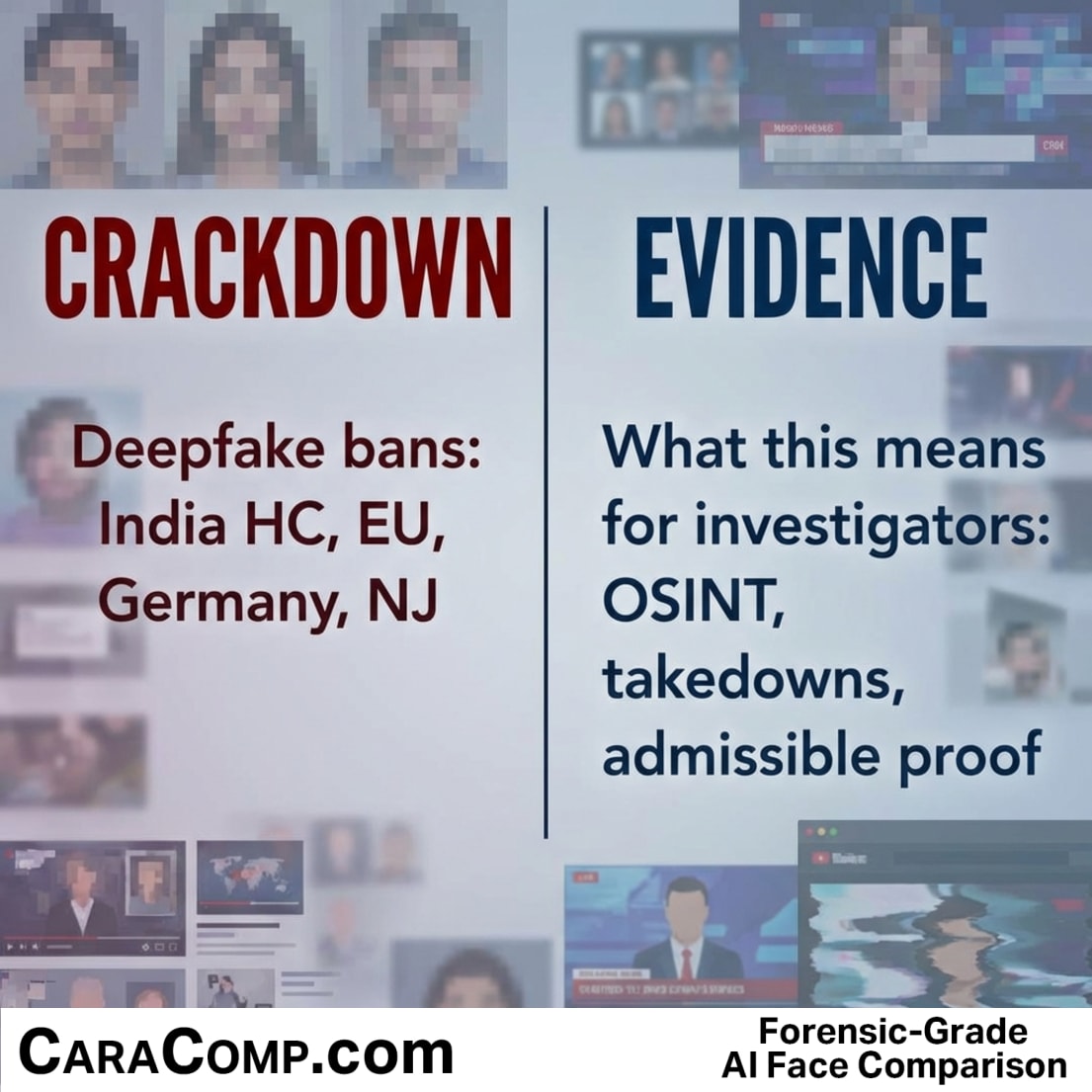
Three hours is all it takes for a platform to erase the most critical evidence in your case. India’s new IT Rules 2026, which demand deepfake takedowns within a three-hour window, aren't just a regulatory hurdle—they are a structural "evidence shredder" for every private investigator and OSINT researcher on the planet. When platforms are forced to delete content before a human can even review it, the ability to forensically document a crime disappears into the digital ether.
We are witnessing a global regulatory rush where lawmakers in India, the EU, and the United States are swinging blunt hammers at complex AI problems. While the intent—stopping non-consensual imagery and synthetic fraud—is vital, the execution is dangerously imprecise. For the professional investigator, these laws create a "takedown paradox." To prove a deepfake exists in court, you need the original file to survive long enough to be analyzed, hashed, and archived. Instead, automated systems are now incentivized to "delete first, ask questions never."
The real danger for the investigative community is the inevitable conflation of facial comparison with mass surveillance. High-level facial comparison—the scientific side-by-side analysis of Euclidean distance between face embeddings—is a standard forensic methodology. It is how we prove that a subject in an insurance fraud photo is the same person in a "deepfaked" social media video. However, as regulators tighten the noose on AI, they are failing to distinguish between controversial crowd-scanning and the essential, side-by-side comparison tools that solo investigators use to close cases. If we don’t draw a hard line between surveillance and forensic analysis, the tools you rely on to provide court-ready reporting could be the next collateral damage.
- Automated Over-Removal Destroys Discovery: Rapid 3-hour takedown windows eliminate the time required for investigators to capture metadata and preserve the evidentiary chain of custody.
- The Regulatory "Identity Crisis": Vague legislation often fails to distinguish between facial recognition (surveillance) and facial comparison (investigation), threatening the legality of professional forensic tools.
- Explainability is the New Gold Standard: As detection signals become less reliable, court-admissible evidence will depend entirely on explainable Euclidean distance analysis rather than "black box" AI labels.
For the solo PI or small firm, the message is clear: the window to collect evidence is shrinking. You can no longer afford to spend three hours manually squinting at photos when the platforms are deleting the evidence in that same timeframe. Professional-grade technology isn't just a luxury anymore; it’s the only way to move fast enough to beat the "delete" button.
Read the full article on CaraComp: India's 3-Hour Deepfake Deadline Puts Evidence and Investigators at Risk


Comments
Post a Comment