Facial Recognition Isn't Getting Banned. Mass Surveillance Is. Here's the Difference.
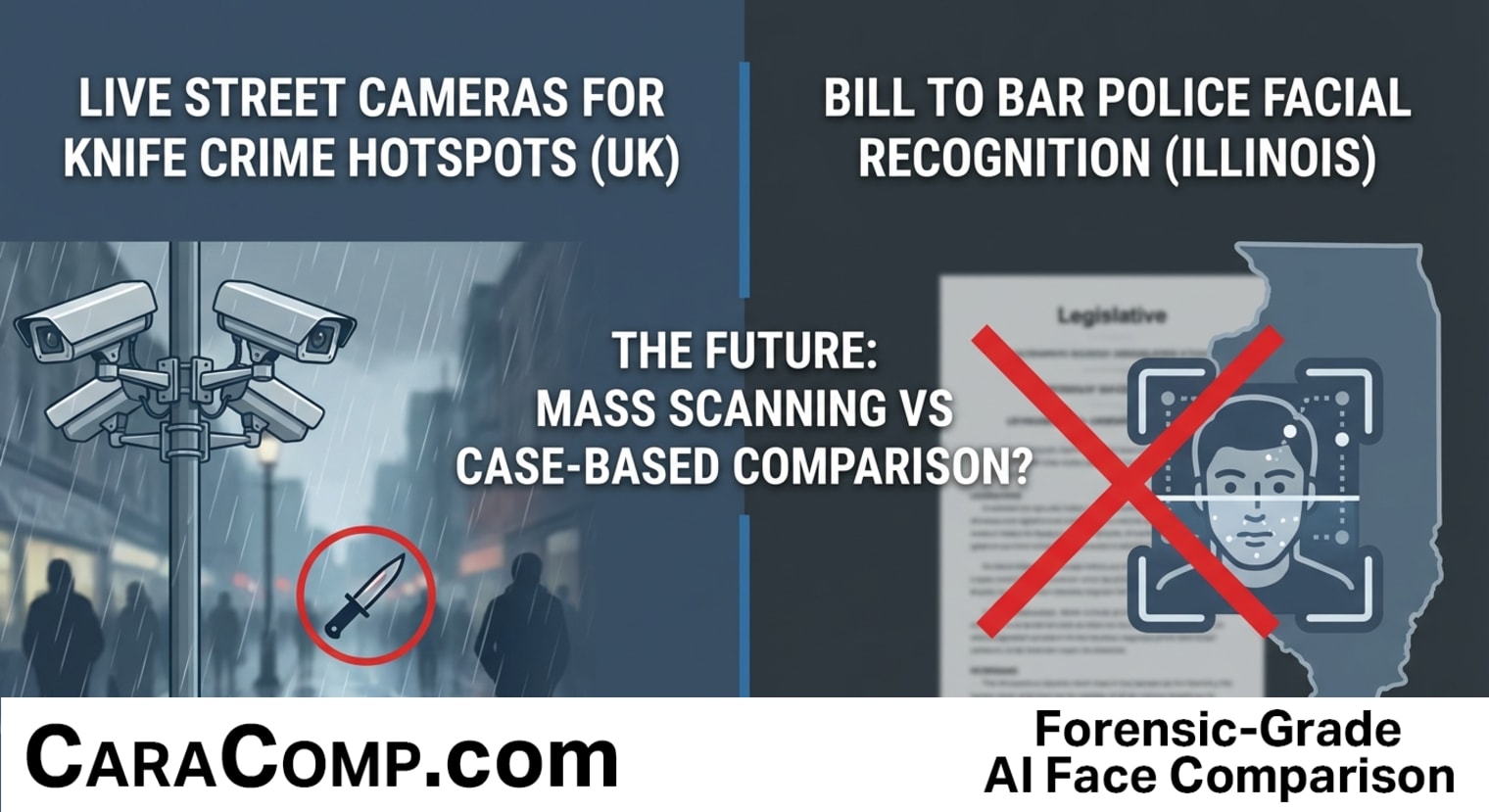
While lawmakers in Illinois are frantically trying to ban police from even "possessing" biometric tools, the Metropolitan Police in the UK just proved the technology works by generating 962 arrests in a single year for crimes as severe as rape and robbery. This isn’t a story about government overreach; it’s a story about a massive technical and legal divide that solo investigators can no longer afford to ignore. The headlines are screaming about bans, but if you look closer, the "bans" are targeted at mass surveillance, not the professional facial comparison you use to close cases.
For the private investigator or OSINT researcher, the signal is clear: the industry is splitting in two. On one side, you have live, passive crowd-scanning—the kind of "Big Brother" tech that triggers legislative panic. On the other side, you have case-specific facial comparison. One is a regulatory nightmare; the other is becoming a standard investigative necessity. Regulators in China and the UK are already moving toward a "necessity" model, where comparing photos for a specific case is legally defensible as long as it isn't the sole basis for an arrest.
What does this mean for the solo firm or the insurance investigator? It means that expensive enterprise tools built for "scanning the world" are increasingly becoming a liability, while focused comparison tools are the only safe way forward.
- The "Sole Basis" Rule is the new standard — Regulators are codifying the fact that facial comparison is an investigative lead, not a final verdict. If your tool provides Euclidean distance analysis to support your findings, you are on the right side of the law.
- Comparison vs. Surveillance — The legal hammer is falling on live public scanning. Private investigators who focus on comparing known case photos against specific databases are operating in a protected "case-based" category.
- Enterprise bloat is a risk — High-priced contracts often come with surveillance capabilities you don't need and regulators don't want. Lean, comparison-focused tech provides the same 1:1 or 1:N accuracy without the legal baggage.
At CaraComp, we see this regulatory shift as a win for the tech-savvy investigator. By focusing on affordable, case-specific comparison rather than mass monitoring, solo PIs can access the same Euclidean distance analysis used by federal agencies—at 1/23rd the price—without worrying about the next legislative sweep in Illinois or beyond.
Read the full article on CaraComp: Facial Recognition Isn't Getting Banned. Mass Surveillance Is. Here's the Difference.


Comments
Post a Comment