Deepfakes Scaled. Your Verification Didn't.
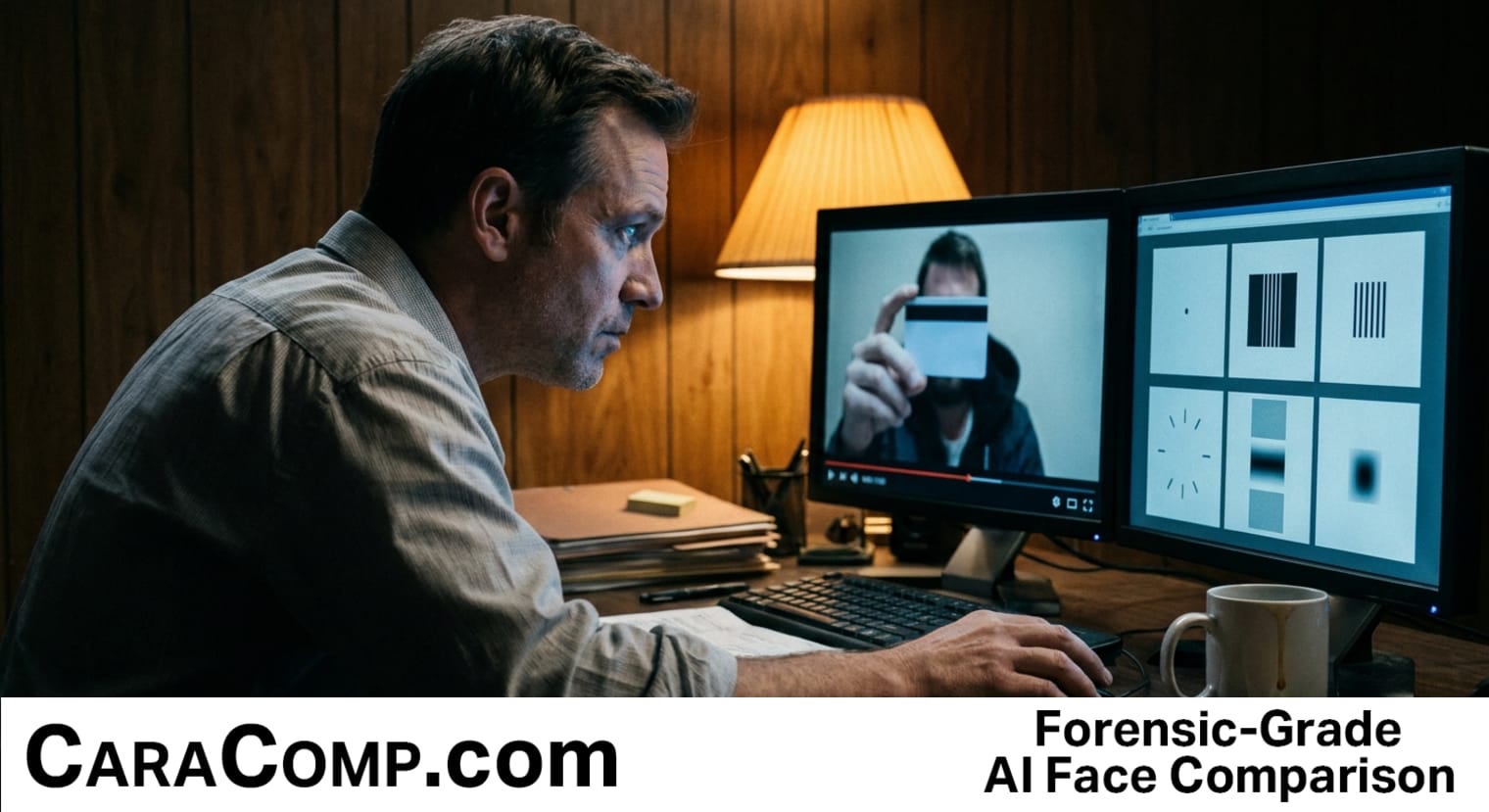
If you are still relying on basic liveness detection to catch AI-generated fraud, you are essentially bringing a knife to a drone fight. FBI data shows that fraud losses tied to AI content hit a staggering $893 million in 2025, a massive 2,100% increase over just three years. While the security industry has spent years obsessing over "detection accuracy" in a vacuum, they have ignored the more dangerous reality: the speed of verification is now the primary failure point in investigative workflows.
For the solo private investigator or the small PI firm, this isn't just a technical glitch—it is a business-ending threat. The assumption that standard identity checks or document scans can stop a sophisticated injection attack is a dangerous myth. Attackers are no longer just holding photos up to webcams; they are intercepting video streams and substituting synthetic faces in real-time. If your current toolkit doesn't allow you to perform a professional facial comparison using Euclidean distance analysis within seconds, you are already behind the curve.
At CaraComp, we see this gap every day. Solo investigators know that enterprise-grade tools exist, but they are often locked behind $2,400-a-year contracts and complex APIs. This leaves the independent professional stuck between unreliable consumer apps and manual comparison methods that take hours. In a world where a deepfake can drain an account or corrupt a digital evidence chain in minutes, a three-hour manual review is as good as no review at all. We believe that professional-grade facial comparison technology shouldn't be a luxury for federal agencies; it must be the standard for anyone handling case analysis.
- Liveness detection is no longer a silver bullet — Sophisticated injection attacks bypass basic "is there a person here" checks, making side-by-side facial comparison of known vs. suspect images a non-negotiable requirement for modern investigators.
- Operational speed is the new forensic benchmark — Accuracy is useless if the verification takes hours. Real-world investigations require tools that can batch-process faces and generate court-ready reports before the lead goes cold.
The "identity gap" is widening. While bad actors scale their synthetic attacks using automation, many investigators are still struggling with manual methods or outdated software. Bridging this gap requires moving away from the "surveillance" mindset and toward precise, affordable facial comparison technology that fits into a busy investigator’s daily workflow.
Read the full article on CaraComp: Deepfakes Scaled. Your Verification Didn't.


Comments
Post a Comment