Deepfakes Just Won. Here's the Only Move Left.
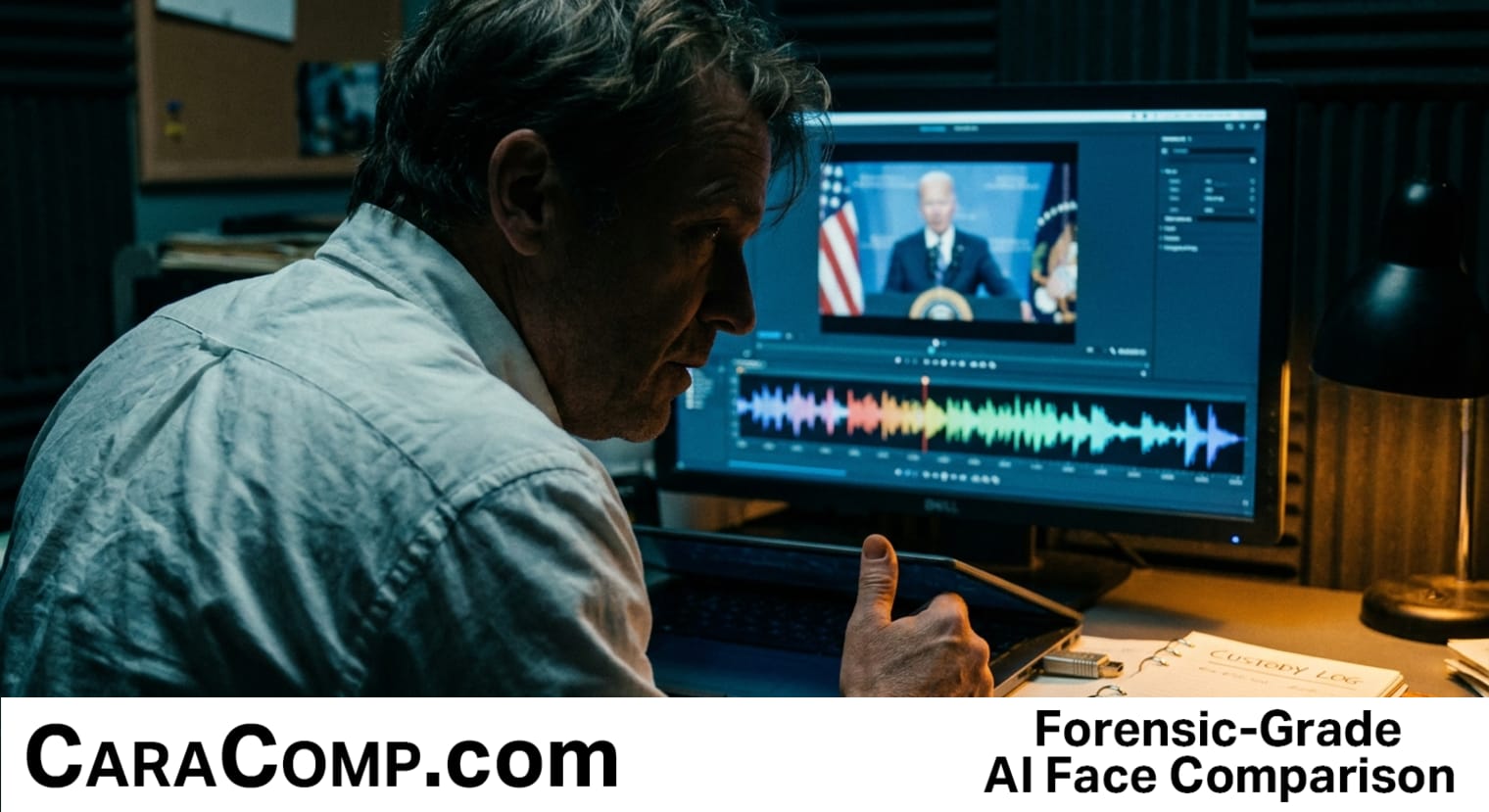
Stop looking for "tells" or pixel glitches in suspect video. The arms race between AI generators and deepfake detectors is officially over, and the generators won by a landslide. When AI-generated content can bypass forensic detection tools with over 90% accuracy, relying on a software "probability score" to verify a subject isn't just risky—it’s professional negligence.
For the modern investigator, this isn't just about political misinformation; it’s a fundamental threat to the evidentiary chain. We are moving toward a "trust collapse" where the mere existence of deepfakes allows bad actors to claim authentic footage is fabricated. If you are a solo PI or an OSINT researcher, you cannot afford to stay in the reactive lane. The industry is shifting from forensic detection (trying to catch a fake) to authenticity verification (proving the person on screen matches a known, verified biometric profile).
This is where professional-grade facial comparison becomes the investigator's only reliable shield. While consumer-grade search tools offer "best guesses," serious case analysis requires hard data. To stand up in court or provide a definitive report to a client, you need the same Euclidean distance analysis used by federal agencies to compare suspect media against unimpeachable source material. You aren't just looking at a face; you’re looking at a mathematical biometric signature that doesn't care about AI filters or lighting tricks.
- Detection is a dead end: As generation AI outpaces detection AI, forensic analysis of "artifacts" is becoming structurally unreliable for professional investigations.
- Identity verification is the new default: The only way to debunk a deepfake or verify a lead is to compare the subject's biometric markers against a verified chain of custody.
- The "Liar’s Dividend" is real: The rise of deepfakes makes it easier for subjects to deny real evidence; investigators must be equipped with court-ready comparison reports to shut down these defenses.
The era of manual visual comparison is over. If you're still spending hours squinting at two photos, or worse, staking your reputation on a $2,000-a-year enterprise tool that does the same math we do for a fraction of the cost, it’s time to upgrade your toolkit. The winning strategy in this new landscape isn't catching the fake—it's proving the truth with high-precision facial comparison.
Read the full article on CaraComp: Deepfakes Just Won. Here's the Only Move Left.


Comments
Post a Comment