Deepfake Fraud Hits $1.1B — and Your Eyes Are Wrong 75% of the Time
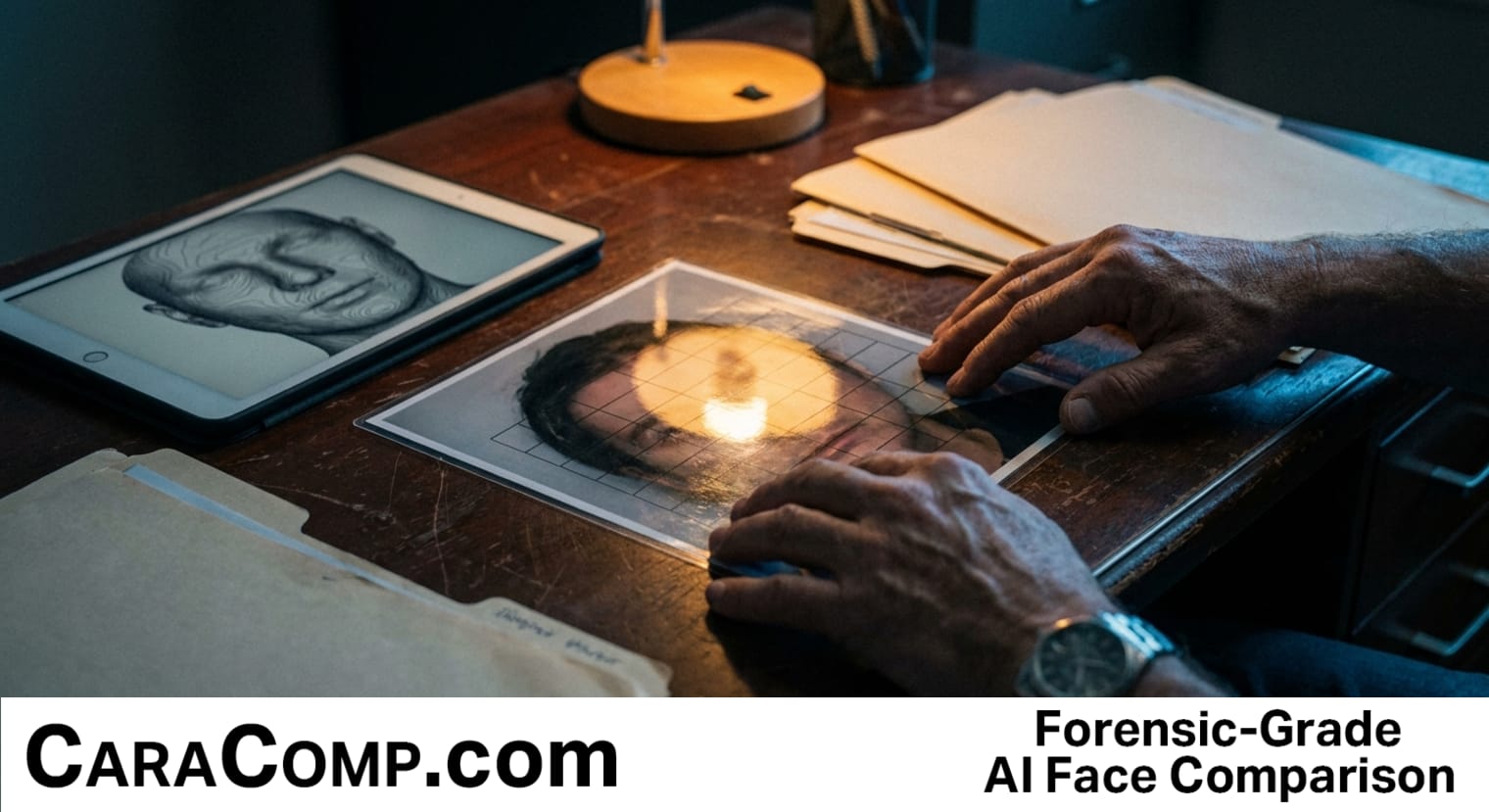
You’d have better luck betting your client’s retainer on a coin flip than trusting your own eyes to spot a deepfake. Recent data reveals that humans correctly identify synthetic video only 24.5% of the time. When the "eye test" fails three out of four times, the traditional investigative method of manual visual verification isn't just outdated—it’s professional negligence.
With deepfake fraud losses hitting $1.1 billion in 2025, the stakes for private investigators and OSINT professionals have shifted from "finding the person" to "proving the evidence." The Arup case, where a firm lost $25 million to a synthetic video call, proved that even live interaction is no longer a guarantee of identity. For the solo investigator, this creates a massive credibility gap. If you are still relying on a side-by-side visual "hunch" to confirm a subject's identity in a fraud or insurance case, you are bringing a knife to a drone fight.
The industry is moving toward a quantitative reality. To survive cross-examination in this new landscape, investigators must stop "looking" and start "measuring." Enterprise-grade facial comparison—the kind that uses Euclidean distance analysis to provide a mathematical confidence score—is the only way to defend an identity claim in court. For years, this tech was locked behind five-figure agency contracts. Today, it’s the standard tool for the tech-savvy investigator who understands that subjective impressions won't hold up when synthetic media is the baseline.
- The "Visual Eye Test" is Legally Dead: With humans failing to spot fakes 75% of the time, any investigation relying solely on manual visual comparison is a liability waiting to happen in a courtroom.
- Euclidean Distance is the New Forensic Minimum: To combat $1.1B in annual fraud, investigators must adopt mathematical analysis. Measuring the geometric relationship between facial features provides an objective score that "gut feelings" can’t match.
- Affordability No Longer Limits Authority: High-level case analysis is no longer reserved for federal agencies. Solo PIs can now generate the same caliber of court-ready reporting that was previously gatekept by enterprise pricing.
If your case relies on "it looks like him to me," you’ve already lost. In an industry where reputation is everything, the shift from visual intuition to biometric data is the only way to ensure your evidence remains bulletproof.
Read the full article on CaraComp: Deepfake Fraud Hits $1.1B — and Your Eyes Are Wrong 75% of the Time


Comments
Post a Comment