A Deepfake Fooled a Notary on a Live Call. The Ears Gave It Away.
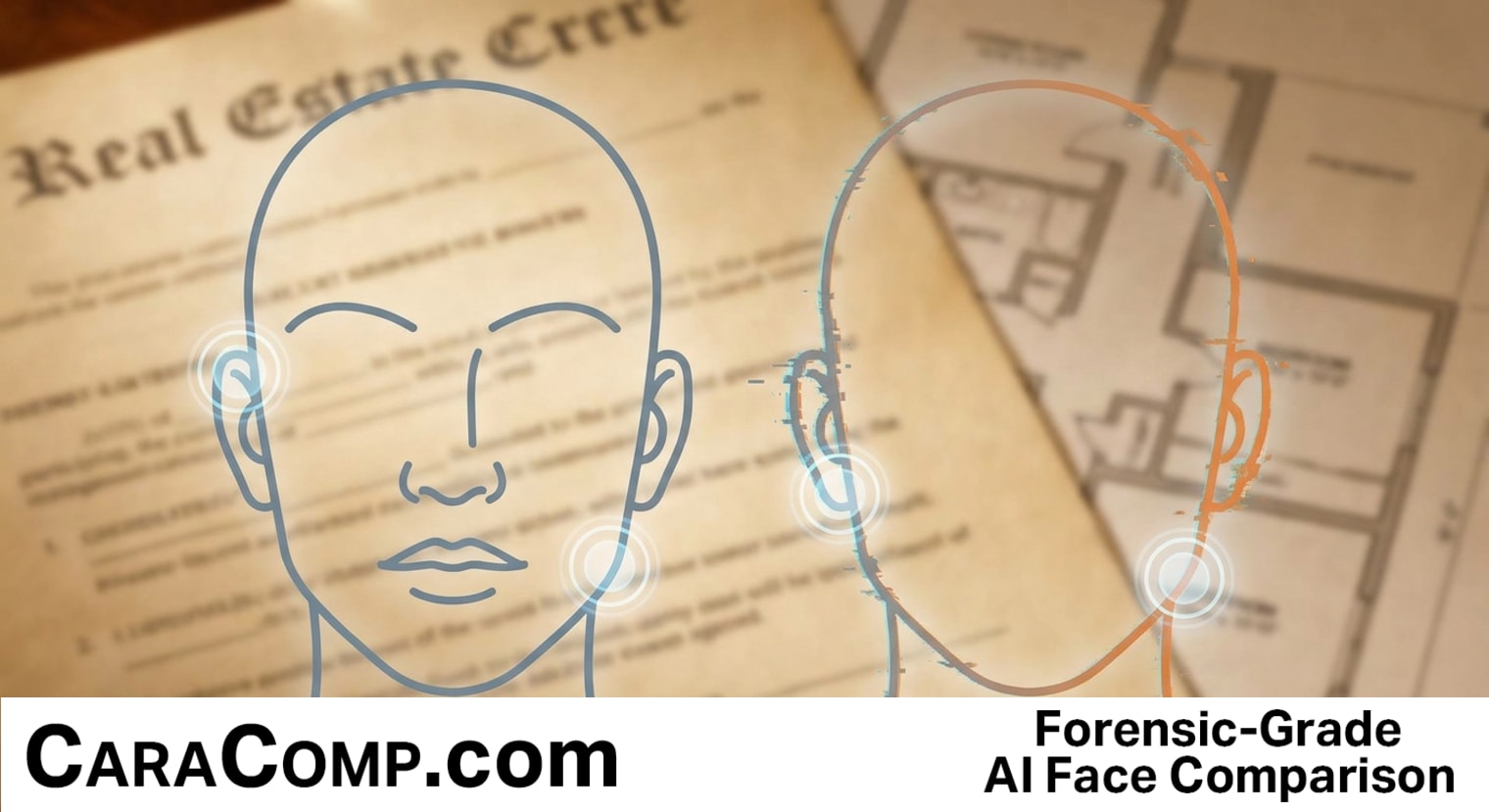
If you think your "gut feeling" is enough to spot a fraudster on a video call, you are exactly the kind of mark a deepfake artist is looking for. The recent case in Maryland—where a notary was fooled during a live transaction for a $100,000 land deal—is a flashing red siren for the private investigation and OSINT community. A live deepfake passed every human check in real-time, proving that the days of relying on "intuition" to verify identity are officially over.
For investigators, this isn't just a tech story; it’s a professional liability. When a fraudster uses generative AI to impersonate a property owner or a person of interest, they aren't just fooling the client—they are making the investigator look obsolete. The notary in this case wasn't negligent; they were simply outgunned by technology. What eventually flagged the fraud wasn't a keen eye, but software that identified geometric inconsistencies in the "ears" and facial landmarks. While the human eye sees a face, sophisticated facial comparison technology sees a map of 468 biometric coordinates. Geometry doesn't lie, even when the synthetic skin on top of it looks perfect.
- Manual comparison is a professional risk: Relying on visual observation for identity verification is no longer a standard of care; it’s a vulnerability that can lead to six-figure errors and ruined reputations.
- Euclidean distance analysis is the new gold standard: To catch deepfakes, investigators must shift from "looking" to "measuring." Analyzing the precise ratios between facial landmarks is the only way to detect a face-swap that is geometrically impossible.
- The "Industry Gap" is closing: Enterprise-grade tools that once cost thousands are now accessible to solo PIs, meaning there is no longer an excuse to be caught behind the tech curve during a high-stakes case.
The lesson for every OSINT professional and private investigator is clear: if you aren't using Euclidean distance analysis to verify your subjects, you are guessing. Deepfakes are designed to bypass human psychology. They cannot, however, bypass the laws of geometry. As these synthetic attacks become more common in insurance fraud and real estate, the investigators who survive will be the ones who replace their "hunch" with hard, court-ready biometric data.
Read the full article on CaraComp: A Deepfake Fooled a Notary on a Live Call. The Ears Gave It Away.


Comments
Post a Comment