$47M Deepfake Fraud Ring Exposes a Blind Spot in Evidence Workflows
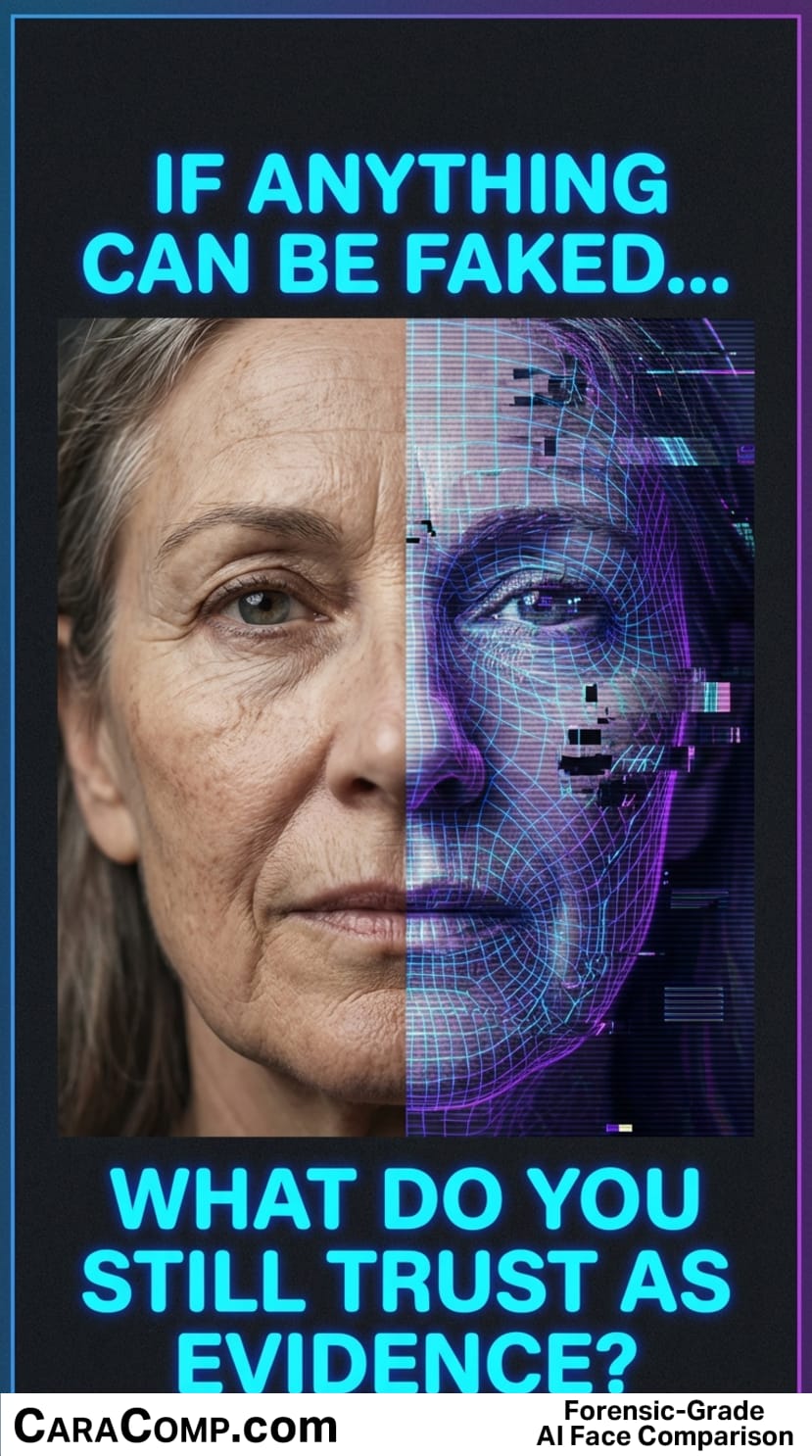
Stop looking for "glitches" in video evidence. If your investigative workflow still relies on the "naked eye" to spot a deepfake, you aren't just behind the curve—you are a liability to your clients. The federal unsealing of a $47 million fraud ring targeting over 1,200 victims proves that synthetic media has officially reached industrial-scale maturity. This isn't about hobbyists swapping celebrity faces anymore; it is about organized criminal networks using AI-generated voices and synthetic video calls to systematically drain life savings.
For the solo investigator and the small PI firm, this news story is a massive warning shot. We have crossed the "indistinguishable threshold" where AI-generated media is high-fidelity enough to defeat casual human observation. When fraudsters can impersonate government officials with enough precision to steal millions, the "does this look real?" standard of evidence validation is officially dead. If you are still manually comparing faces across case photos or relying on "gut feelings" to authenticate a subject, you are gambling with your professional reputation.
The industry is shifting from a visual validation model to a biometric verification model. In a world where "seeing is no longer believing," identity must be mathematically proven. This is where facial comparison—specifically Euclidean distance analysis—becomes the investigator's most critical shield. By stripping away the visual "noise" of a deepfake and focusing on the underlying geometry of the face, investigators can bypass the uncanny valley and verify identity against controlled, verified sources. It is no longer about detecting a fake; it is about corroborating a match using technology that holds up under the heat of a courtroom cross-examination.
- Visual "tells" are effectively obsolete: Modern synthetic media has bypassed human detection capabilities, meaning manual visual inspection is no longer a defensible investigative standard in 2025.
- Mathematical corroboration is the new baseline: Investigators must pivot from "detecting fakes" to "verifying identity" through controlled facial comparison tools that offer objective, Euclidean distance measurements.
- The evidence validation gap is widening: Solo PIs and small firms without access to affordable, enterprise-grade comparison tech will see their findings increasingly shredded during discovery and legal challenges.
The standard you need today is the one that holds up when a client's life savings or a criminal conviction is on the line. Don't wait for a "glitch" that isn't coming. Move to a comparison-based workflow and let the math do the talking.
Read the full article on CaraComp: $47M Deepfake Fraud Ring Exposes a Blind Spot in Evidence Workflows


Comments
Post a Comment