YouTube's Deepfake Shield for Politicians Changes Evidence Forever
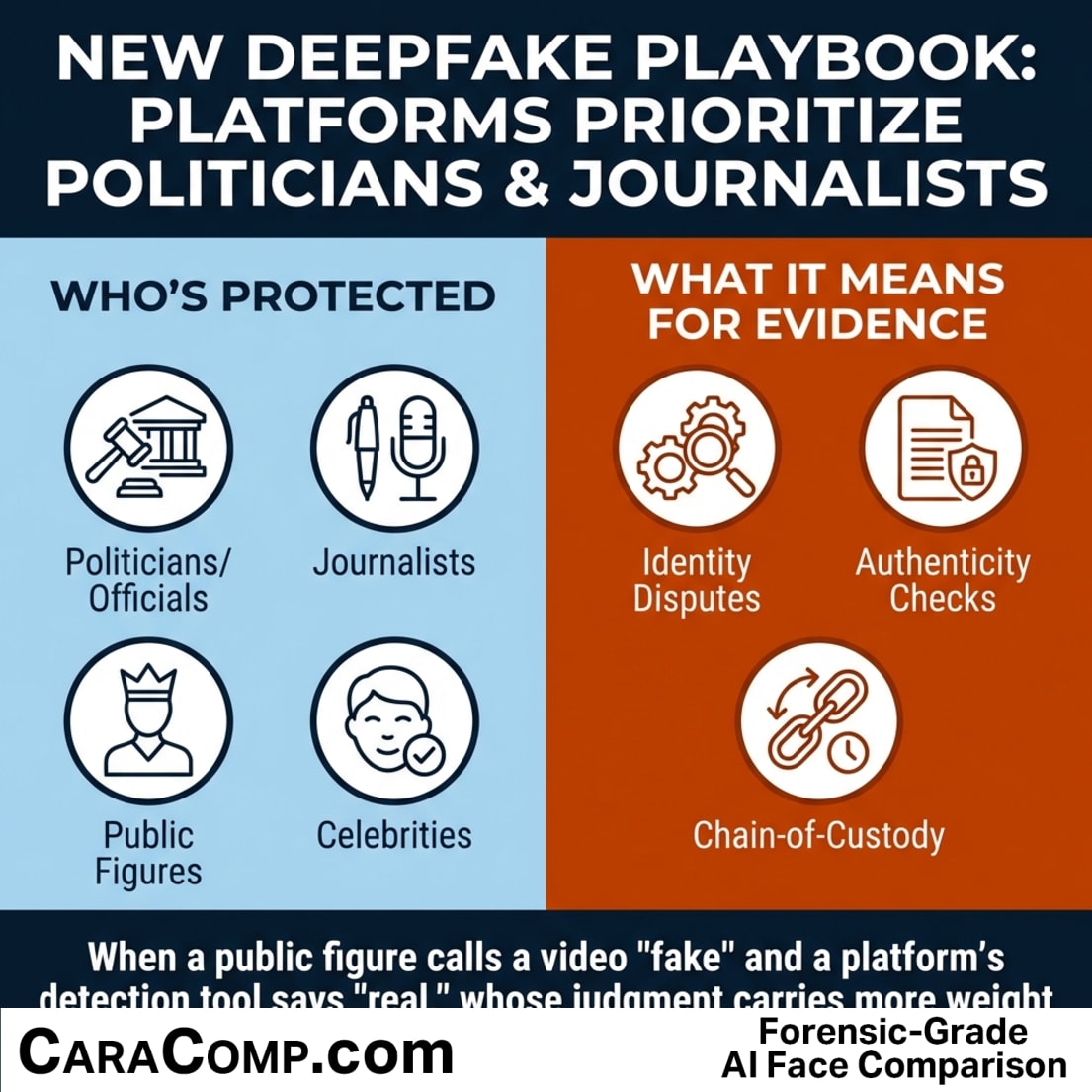
When the Prime Minister of Israel has to produce a "proof of life" video because a social media AI flagged his coffee shop footage as a deepfake, the investigative landscape hasn't just changed—it has collapsed. YouTube’s recent expansion of its deepfake detection tools to protect politicians and journalists is being framed as a win for "digital safety," but for the professional investigator, it’s the starting gun for an evidentiary crisis. We are officially entering the age of the "Liar’s Dividend," where any subject caught on camera can simply claim the footage was generated by a prompt.
For solo PIs and OSINT researchers, this move by big tech signals a terrifying shift in the burden of proof. If Elon Musk’s AI can’t accurately verify a world leader, how is a solo investigator supposed to walk into a deposition and swear that the person in their surveillance video is actually the claimant? Relying on a "visual gut call" is no longer an option. Defense attorneys are already salivating at the chance to dismiss authentic evidence by invoking the mere possibility of synthetic media. To survive this, investigators must move beyond manual comparison and start using the same Euclidean distance analysis that federal agencies use to verify identity.
The irony is that while platforms like YouTube build "shields" for the elite, the average investigator is left in the dirt with consumer-grade tools that offer zero reliability and no professional reporting. You cannot stake your reputation on a tool with a 2.4/5 trust rating or a "vibe check." You need a documented, scientific methodology that proves a match based on biometric geometry, not just pixels. This is no longer about finding a needle in a haystack; it’s about proving the needle is real when the entire world is screaming that it’s a hologram.
- The "Liar's Dividend" is now a standard defense strategy: Every skip-trace target or fraudster will now use the existence of deepfakes to challenge the authenticity of your surveillance footage, making independent facial comparison workflows mandatory.
- Platform-level flags are not evidence: A "deepfake" tag from a social media site is a policy decision, not a forensic fact. Investigators need their own enterprise-grade analysis to provide court-ready reports that withstand cross-examination.
- Methodology beats visual assessment: As identity becomes a contested technical standard, investigators who rely on manual side-by-side guessing will be replaced by those using precise biometric comparison tech.
The "see it to believe it" era is dead. If you aren't arming your firm with the technical tools to back up your findings with hard data and Euclidean distance metrics, you’re just one "AI-generated" objection away from a tossed case. It's time to stop playing catch-up with enterprise tech and start using it.
Read the full article on CaraComp: YouTube's Deepfake Shield for Politicians Changes Evidence Forever


Comments
Post a Comment