Why 220 Keystrokes of Behavioral Biometrics Beat a Perfect Face Match
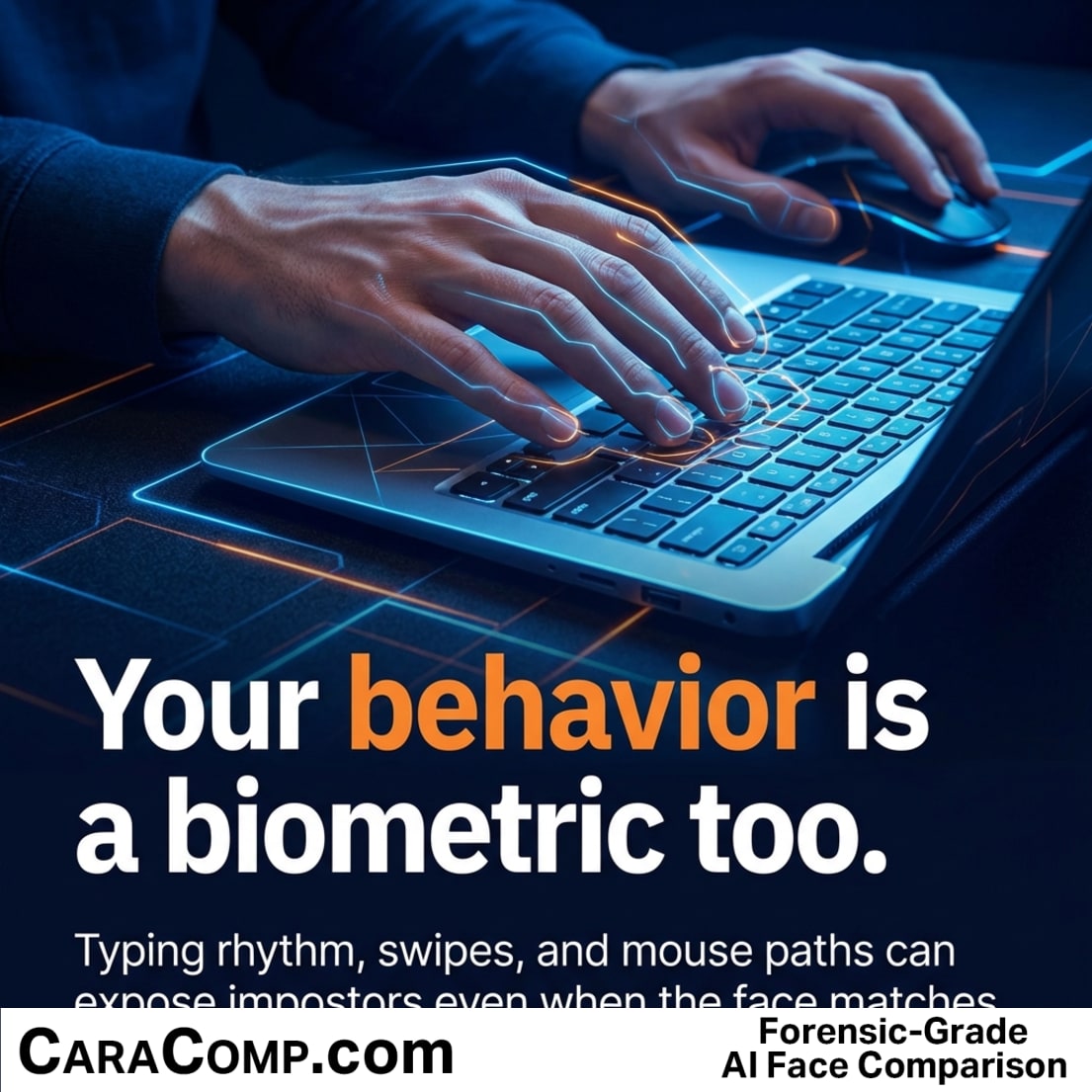
Your subject has the right face, the right password, and the right ID—but their fingers just gave them away. In the high-stakes world of identity verification, we are moving past the "front door" era of security. Recent analysis into behavioral biometrics reveals a jarring truth for investigators: a perfect facial match is no longer the finish line. If an impostor’s "fist"—the rhythmic cadence of their typing and mouse movements—doesn't match the established baseline, the most sophisticated visual disguise in the world won't save them.
For the solo private investigator or the small OSINT firm, this shift is a double-edged sword. On one hand, it highlights the growing complexity of fraud; on the other, it validates the need for high-precision investigative tools that go beyond simple "looks like" guesses. At CaraComp, we see this evolution as a call to arms for the professional community. If enterprise-level systems are now tracking "dwell time" and "flight time" between keystrokes to verify identity, investigators can no longer rely on low-rent consumer search tools that offer nothing more than a coin-flip’s chance of accuracy.
The reality is that identity is a multi-layered puzzle. While behavioral biometrics are becoming the "digital body language" of the web, the foundation of any solid case remains the physical evidence. However, when you’re presenting a case to a client or a court, "I think this is him" doesn't cut it. You need Euclidean distance analysis—the same math used in these high-end behavioral systems—to prove a match with mathematical certainty. The gap between a hobbyist and a professional is defined by the caliber of the technology they use to bridge these identity gaps.
- Static verification is dying. A single point of authentication is a vulnerability. Modern investigation requires tools that treat identity as a continuous data set rather than a one-time snapshot.
- Reliability is the only currency that matters. As fraudsters get better at spoofing faces and credentials, the "trust score" of your tools must be beyond reproach. Using unverified consumer platforms is a reputational risk that solo PIs can no longer afford.
- Professional reporting is the final frontier. Just as behavioral systems generate risk scores, an investigator must produce court-ready analysis that explains the why behind a match, not just the who.
We are entering a period where the "unconscious rhythm" of a subject is just as valuable as their photograph. For those of us in the trenches, the goal remains the same: staying one step ahead of the impostor by using the same enterprise-grade logic they're trying to circumvent, without the enterprise price tag.
Read the full article on CaraComp: Why 220 Keystrokes of Behavioral Biometrics Beat a Perfect Face Match


Comments
Post a Comment