The Consent Divide: Why Face Tech's Next Battle Is Legal, Not Technical
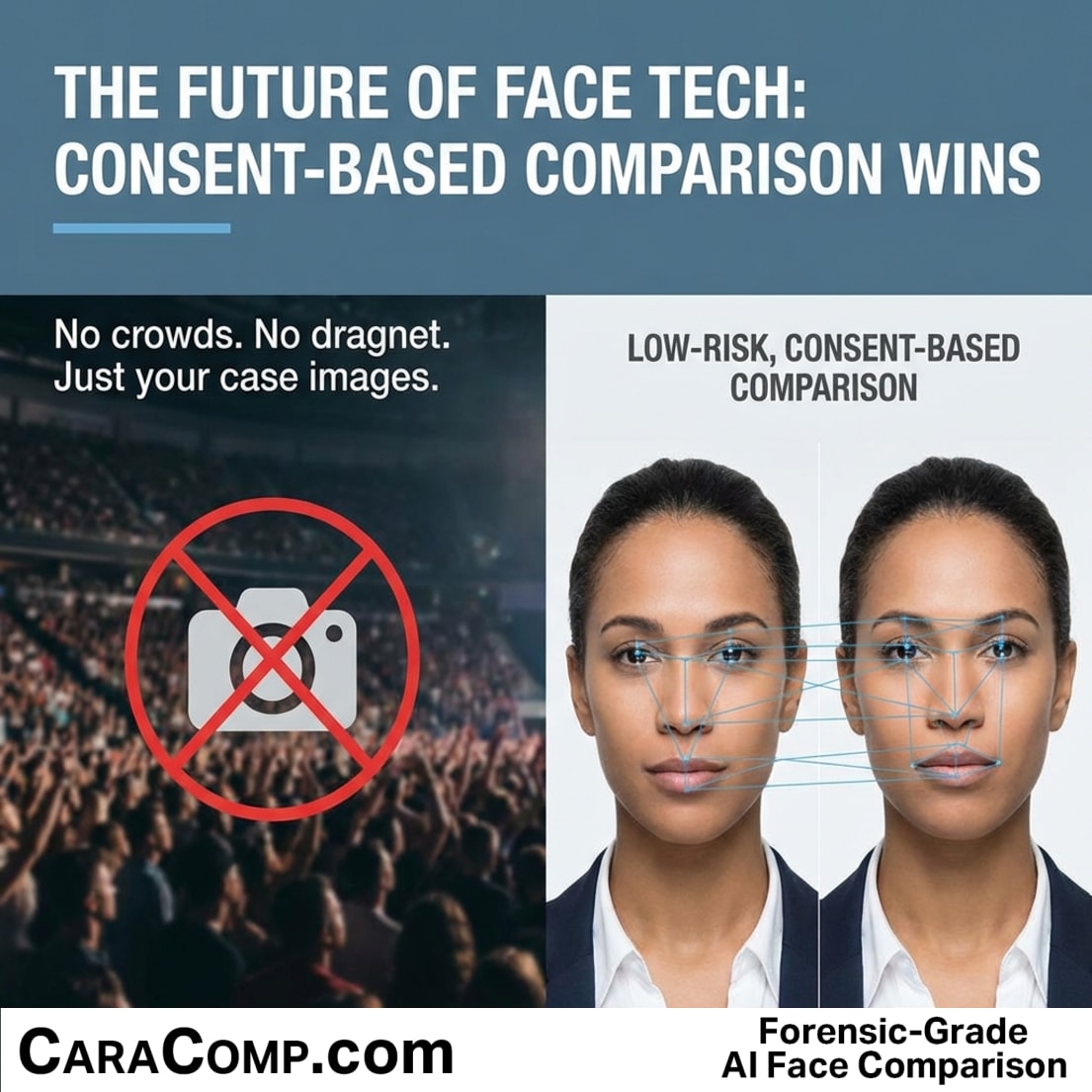
Your next major case result could be thrown out of court before the judge even looks at the evidence—not because your analysis was wrong, but because your tool of choice was a legal liability. While stadiums and concert venues are currently under fire for mass-scanning faces without consent, the real fallout is heading straight for the private investigation industry. The regulatory vacuum that allowed "dragnet" facial recognition to thrive is closing, and investigators who can't distinguish between surveillance and forensic facial comparison are building their firms on legal quicksand.
The "Consent Divide" is the new front line. States like Illinois and New York are already moving toward strict biometric privacy laws that punish non-consensual data collection. For the solo private investigator or small firm, this means the era of relying on "black box" consumer search tools is over. These tools often rely on scraped, non-consensual databases that are becoming toxic in a courtroom environment. If you can’t explain exactly where the data came from and how the comparison was performed, your "hit" is nothing more than hearsay.
The solution isn't to abandon the technology, but to pivot to professional-grade facial comparison. Unlike mass recognition—which scans crowds to find a match—facial comparison is a one-to-one forensic process. It uses Euclidean distance analysis to compare photos you already have legal access to. This shift from "scanning the world" to "analyzing the case file" is what will separate the tech-savvy investigators from those who get hit with a BIPA lawsuit. You don’t need a $2,000-a-year enterprise contract to stay on the right side of this line, but you do need a tool that prioritizes investigative methodology over mass surveillance.
- The "Dragnet" liability is real: Courts are increasingly skeptical of biometric leads generated without explicit consent or clear chain of custody, making mass-recognition tools a high-risk gamble for professional case files.
- Forensic comparison is the safe harbor: Documented, examiner-controlled comparison using Euclidean distance analysis is becoming the standard for admissible investigative evidence.
- Reliability beats reach: As spoofing and false positives plague low-end consumer tools, professional investigators must prioritize batch processing and court-ready reporting to maintain their reputation.
The industry is maturing. The investigators who win the next decade will be those who adopt enterprise-caliber comparison tools that focus on the photos they own, not the crowds they shouldn't be scanning. In a world of increasing biometric scrutiny, being "old school" isn't an option, but being "reckless" is a choice you can’t afford.
Read the full article on CaraComp: The Consent Divide: Why Face Tech's Next Battle Is Legal, Not Technical


Comments
Post a Comment