Facial Recognition's Real Reckoning: Courts Want a Paper Trail
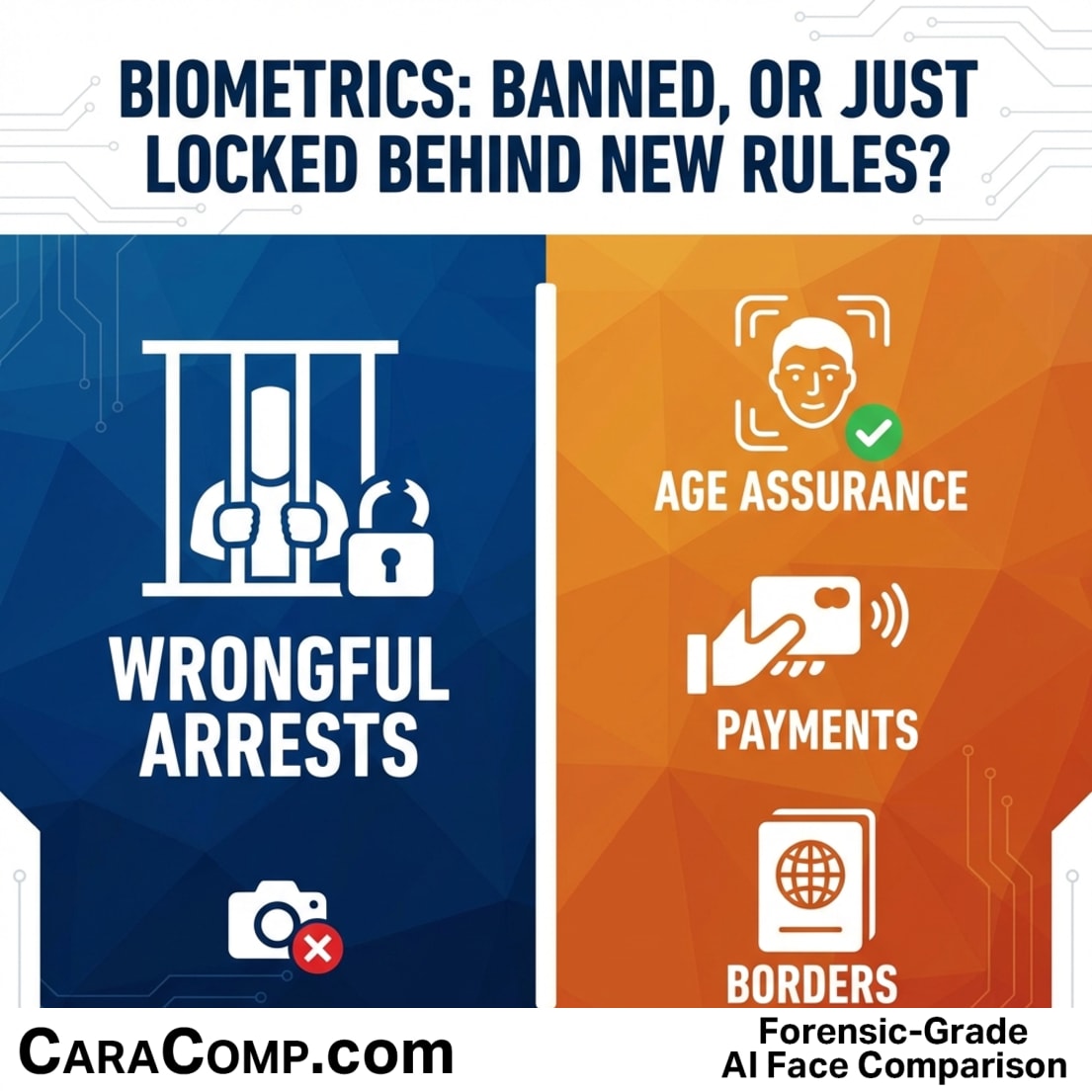
The "ban" on facial recognition is a red herring; the real threat to your investigative career is a judge tossing your best evidence because you can’t show your work. While legislators argue about political theater in Illinois, the actual reckoning is happening in courtrooms where "trust me, I’m an investigator" no longer suffices as a valid methodology. If you aren't producing a documented, auditable paper trail for every match, you are building your cases on shifting sand.
Recent headlines show a terrifying trend: 12 documented wrongful arrests in the U.S. aren't just failures of AI—they are failures of process. In most cases, detectives saw a match and simply stopped doing police work. They failed to verify alibis or seek corroborating evidence. This has led to a massive shift in how courts view biometric data. We are moving toward a world where only documented comparison workflows will survive. Global regulations like Brazil’s Digital ECA and the UK’s Online Safety Act are already setting the floor: if it isn't standardized, interoperable, and auditable, it isn't admissible.
For the solo private investigator or the small firm, this creates a dangerous technology gap. You can’t afford the $2,000-a-year enterprise tools that law enforcement uses, but you can’t risk your reputation on unreliable consumer search tools that offer zero reporting. You need professional-grade analysis that proves you followed a rigorous protocol. This is where Euclidean distance analysis becomes your best friend in court. It moves the conversation from "it looks like him" to "here is the mathematical variance between these two faces."
- Admissibility is the new "must-have" metric: Within 24 months, any investigator who cannot produce a clear comparison log, confidence metrics, and a corroboration checklist will see their evidence thrown out before a jury ever sees it.
- Comparison is not surveillance: The industry is shifting away from "recognition" (scanning crowds) toward "comparison" (analyzing specific photos for a case). This distinction is what keeps your methodology legal and your evidence professional.
- The "Manual Gap" is a liability: Spending three hours manually comparing photos isn't just inefficient; it’s prone to human error that defense attorneys will tear apart. Batch processing with standardized reporting is the only way to stay ahead of the curve.
Stop gambling with your case results. The future of investigation belongs to the tech-savvy professional who knows that a result without a record is just a guess. It’s time to adopt the same Euclidean distance analysis used by federal agencies—without the enterprise price tag.
Read the full article on CaraComp: Facial Recognition's Real Reckoning: Courts Want a Paper Trail


Comments
Post a Comment