Courts Push for 'Proof of Reality' as Deepfakes Undermine Digital Evidence
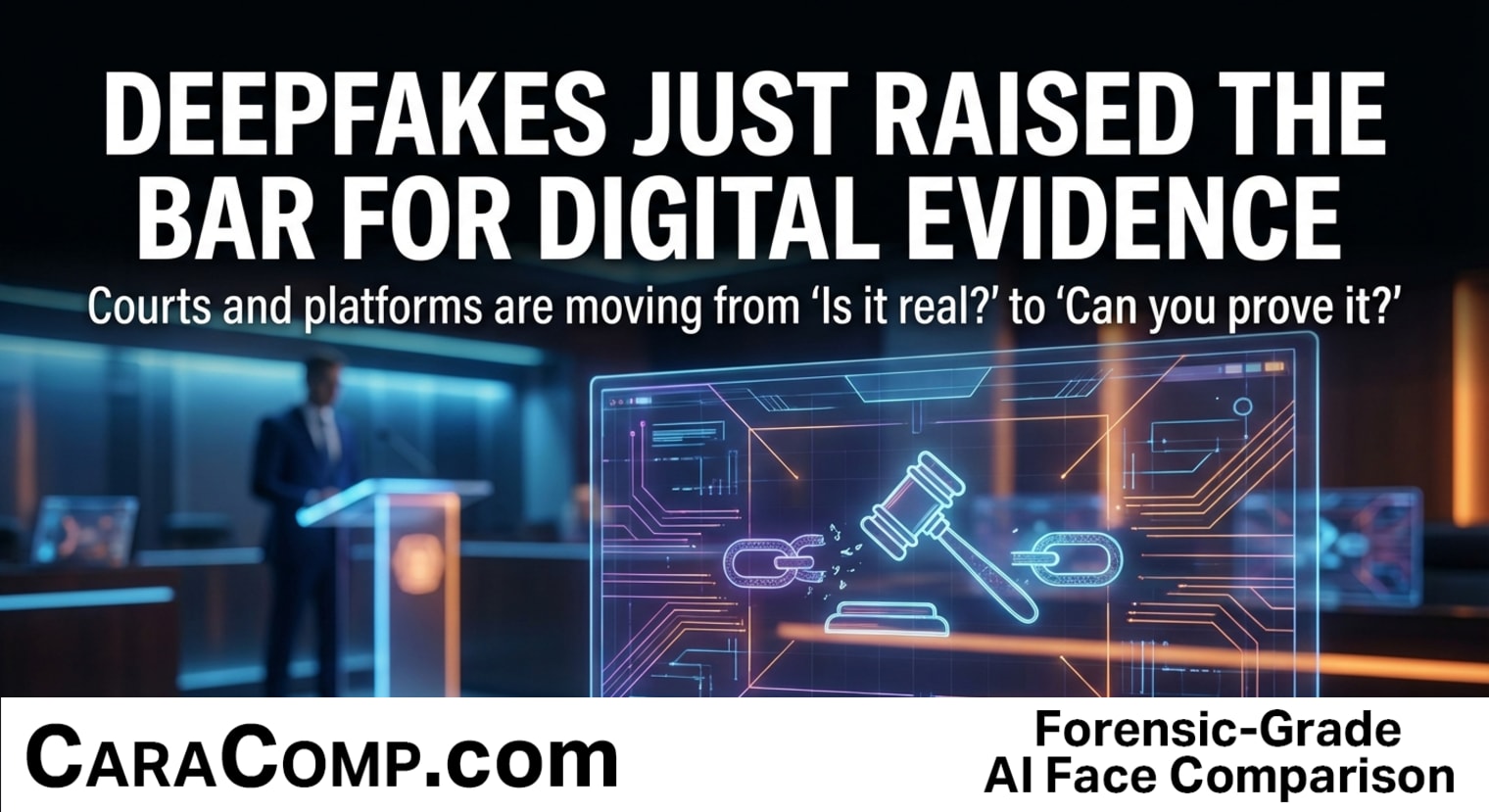
If you think your digital evidence is "good enough" because it looks real to the naked eye, the federal court system is about to pull the rug out from under your feet. We are rapidly approaching a legal cliff where the burden of proof is flipping: digital content is increasingly being treated as suspect until an investigator can affirmatively prove its provenance. For the solo private investigator or the small firm detective, "eyeballing" a photo is no longer just an outdated workflow—it is a massive professional liability.
The proposed federal Rule 901(c) signals a seismic shift in how digital exhibits will be handled. If a deepfake challenge is raised, the person submitting the evidence must be able to demonstrate authenticity by a preponderance of evidence. When opposing counsel has a forensic expert on speed dial, "it looked like the subject to me" will get your case shredded in discovery. High-stakes litigation now demands what the industry calls "Proof of Reality," and that requires more than just a gut feeling; it requires a documented, technical audit trail.
This is where the industry-wide gap becomes dangerous. While big-budget agencies have the six-figure tools to generate forensic reports, many solo PIs are still stuck using unreliable consumer search tools or manual comparison. These methods offer zero technical weight in a courtroom. To survive a deepfake challenge, investigators need professional facial comparison that utilizes Euclidean distance analysis—the same mathematical standard used by enterprise-grade systems—to provide a verifiable, objective match score.
As we move into this new evidentiary landscape, the implications for the investigative profession are clear:
- The Burden of Proof is Flipping: The era of "authentic until proven fake" is ending. Investigators must now prepare for a "suspect until proven real" standard, requiring a technical chain of custody for every facial match.
- Documentation is the New Evidence: A simple side-by-side photo is no longer enough. Court-ready reports that show the mathematical distance between facial features are becoming the minimum viable standard for professional testimony.
- Technological Asymmetry is a Risk: Solo investigators who don't adopt affordable, enterprise-caliber comparison tech will find themselves systematically outmatched by well-funded firms capable of challenging every unverified digital exhibit.
The "Proof of Reality" economy isn't a future trend; it's a current requirement. If your workflow doesn't produce an auditable, professional report today, you are effectively handing opposing counsel the tools to disqualify your hardest-won evidence.
Read the full article on CaraComp: Courts Push for 'Proof of Reality' as Deepfakes Undermine Digital Evidence


Comments
Post a Comment