Blurring a Name Doesn't Anonymise a Face: What GDPR Actually Says
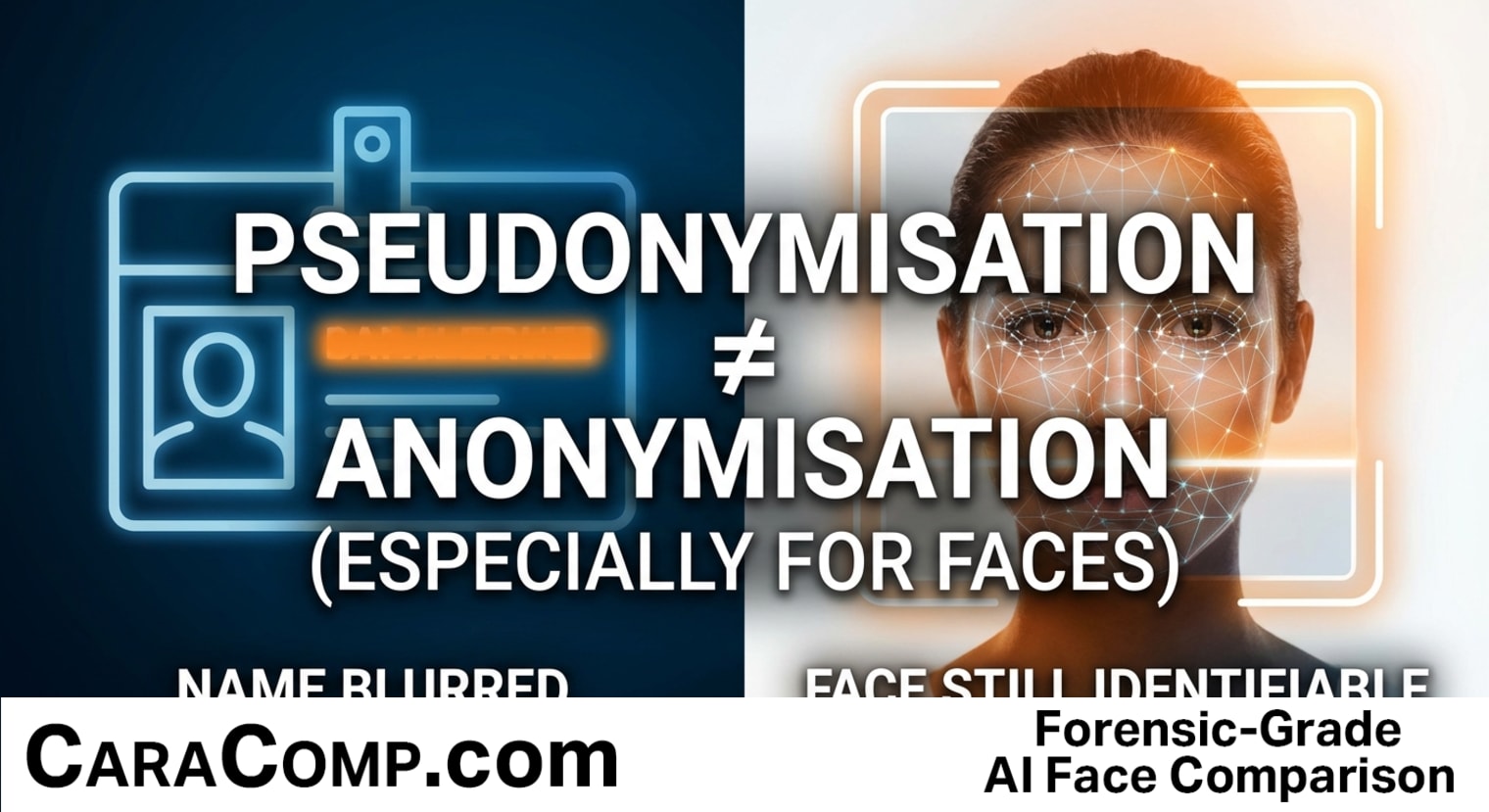
If you think a black bar over a name protects you from a GDPR lawsuit, you’re betting your investigative license on a legal fantasy. The latest EU court rulings have stripped away the "anonymization" myth that many solo private investigators use to justify loose data handling. Blurring a name doesn't make a face anonymous; it just makes it pseudonymized—and in the eyes of the law, that face remains high-stakes biometric data.
For the sharp investigator, this isn't just a legal footnote; it’s a warning shot. When you archive a case file, the facial geometry—the Euclidean distance analysis that defines a subject's unique features—remains personal data because you still hold the "key" to re-identify them. You aren't just storing a picture; you are storing a biometric fingerprint. If you have the technical means to link that face back to a real identity, you are 100% on the hook for every strict regulation under the GDPR and the evolving AI Act.
This is where the distinction between consumer-level searching and professional facial comparison becomes a massive liability. Relying on "free" tools with terrible reliability scores is a recipe for a compliance disaster. Professional investigators must move beyond the "masking" mindset and realize that the pixels themselves carry the legal burden. Whether you're investigating insurance fraud or conducting OSINT research, your evidence must be handled as the special category of data that it is. If your tools don't provide the professional-grade analysis and reporting required for court, you are essentially flying blind into a regulatory storm.
- The "Reasonably Likely" Standard: If you or a recipient can realistically re-identify a subject through your own records or external tools, your "de-identified" files are actually fully regulated biometric records.
- Biometric Special Category: Unlike a phone number or address, a face is an immutable identifier. This makes facial comparison data a high-risk asset that requires enterprise-grade precision and a clear audit trail.
- Mandatory Transparency: Investigators are increasingly required to document how they handle biometric images from the point of capture, meaning your choice of tech determines your legal exposure.
The days of "good enough" data privacy are over. If your workflow doesn't account for the fact that the face is the identifier, you're not just behind the curve—you're a target. Professional results require professional tools that respect the weight of the data you carry.
Read the full article on CaraComp: Blurring a Name Doesn't Anonymise a Face: What GDPR Actually Says


Comments
Post a Comment