Biometric Privacy Law Is About to Split Your Investigative Tools in Two
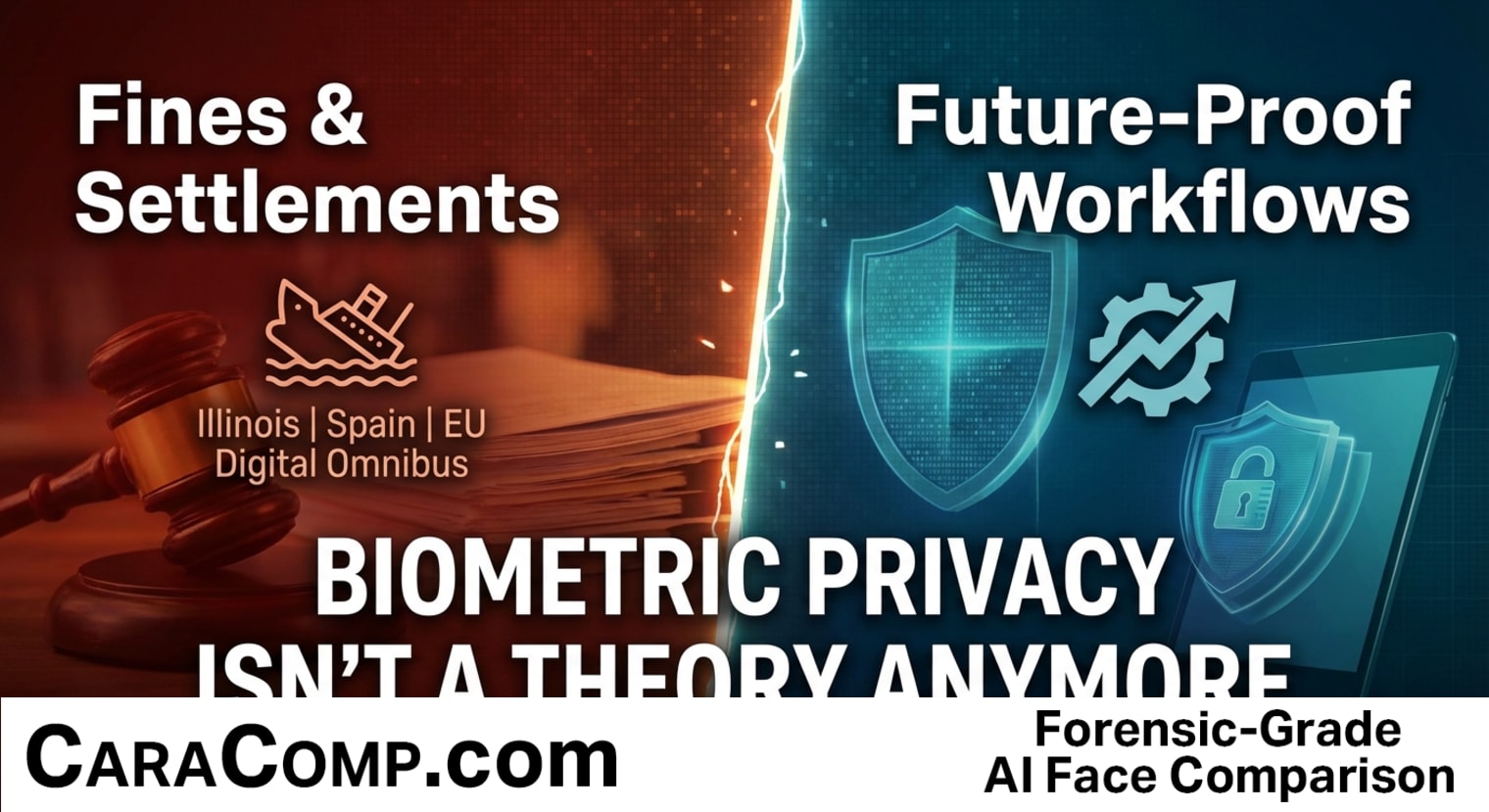
The nearly million-euro fine recently handed down by Spanish regulators isn't just a corporate headache—it’s a death sentence for the "wild west" era of investigative tools. When the AEPD itemized penalties for improper biometric retention and invalid consent, they weren't just punishing one company; they were providing a roadmap for how every solo private investigator and OSINT researcher will be audited in the next 18 months. If you are still relying on consumer-grade search tools or enterprise platforms that lack professional audit trails, your evidence is about to become a liability.
The industry is hitting a hard split. On one side, you have mass surveillance tools that scrape the open web—territory that is increasingly radioactive for professional investigators who value their licenses. On the other, you have facial comparison. This is the professional standard: taking your case photos and performing Euclidean distance analysis to confirm identity. It isn't about scanning crowds; it’s about high-stakes case analysis. The difference between these two methodologies is the difference between a court-admissible breakthrough and a BIPA-related lawsuit that could shutter a small firm.
For the solo PI or the 1-5 person firm, this regulatory shift actually creates a massive opportunity. While big agencies are tied up in enterprise contracts costing $1,800 a year or more, tech-savvy investigators are moving toward agile, affordable comparison tools that offer the same Euclidean precision without the "Big Brother" baggage. You don’t need a federal budget to get enterprise-grade results; you just need a tool that understands the difference between a search engine and a professional comparison engine.
- The Evidence Divorce: Regulators are now distinguishing between one-to-many identification and one-to-one verification. Tools that focus on comparison within your own case files are becoming the only defensible path for court-ready reporting.
- The Audit Trail Mandate: As seen in Spain and Illinois, "we found a match" is no longer enough. If your software can't generate a professional report documenting the methodology and data retention, you are one discovery request away from losing a client.
The window to future-proof your workflow is closing. Investigators who adopt professional facial comparison tech now will be the ones standing when the regulatory dust settles, closing cases faster while their competitors are still manually squinting at photos or praying their "free" tools don't get them subpoenaed.
Read the full article on CaraComp: Biometric Privacy Law Is About to Split Your Investigative Tools in Two


Comments
Post a Comment