AI Called Netanyahu's Café Video a Deepfake. It Wasn't. That's the Real Problem.
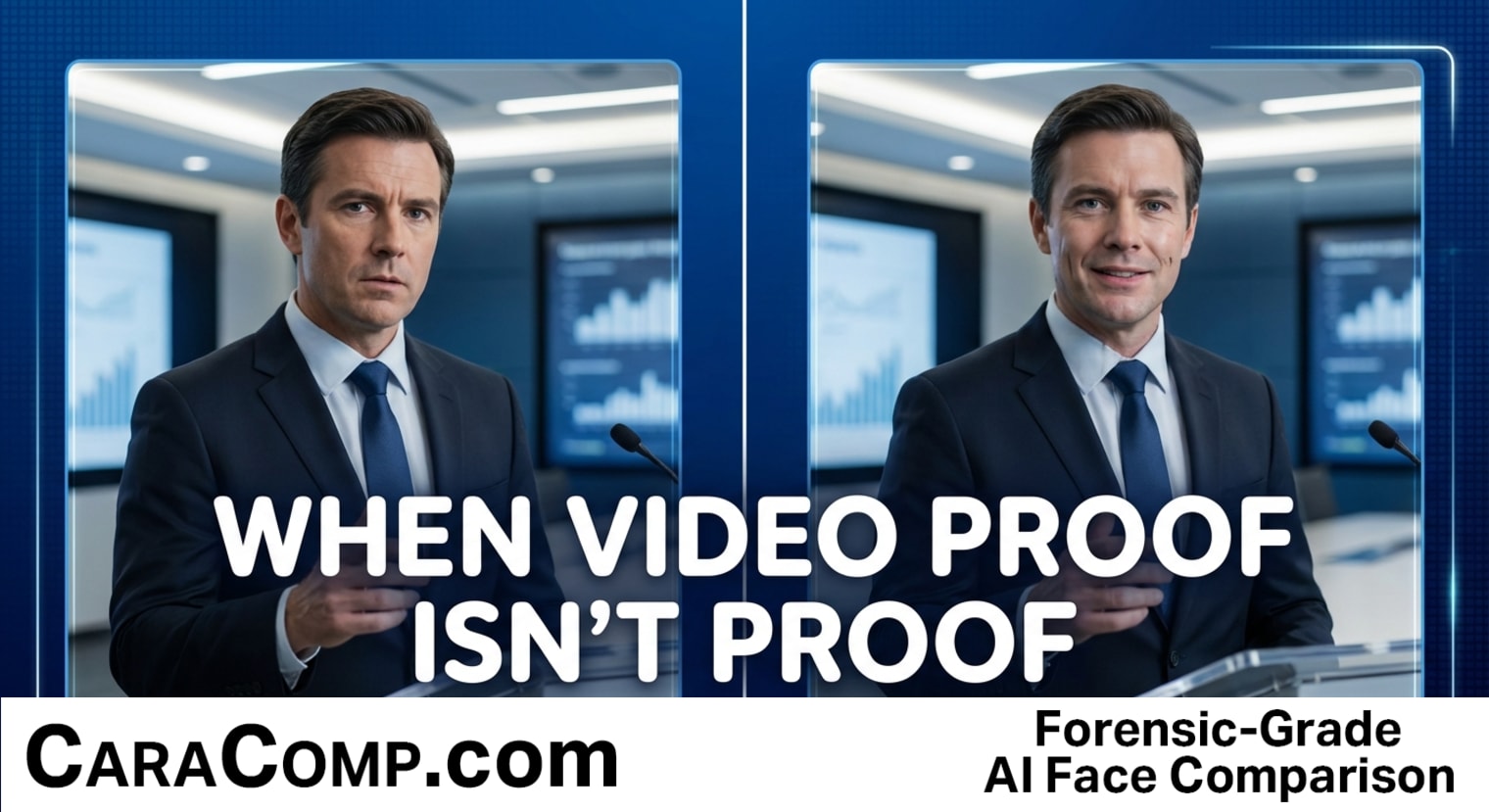
If a world leader sitting in a well-lit café can’t convince the internet he’s actually alive and drinking coffee, your grainy surveillance footage of a slip-and-fall suspect doesn’t stand a chance. When Grok—a high-profile AI chatbot—confidently labeled a genuine video of Benjamin Netanyahu as a "100% deepfake," it didn't just expose a glitch in the algorithm; it signaled the death of the "eyeball test" in modern investigations. For solo private investigators and OSINT professionals, this is a wake-up call that the "Liar’s Dividend" has arrived: the moment where anyone can dismiss legitimate evidence as AI-generated because the tools we rely on to verify reality are failing us.
As investigators, we are entering a phase where "it looks like him" is no longer a valid forensic statement. When AI detection tools produce false positives with such authority, the burden of proof shifts. You can no longer rely on consumer-grade search tools or manual side-by-side comparisons that lack mathematical backing. The Netanyahu incident proves that even with multiple expert teams and UC Berkeley professors involved, the narrative of "fake" can outpace the reality of "fact" in seconds. For a solo PI or a small firm, you don't have a team of forensic professors on speed dial—you need technology that provides a court-ready paper trail before the opposition even thinks to utter the word "deepfake."
This is where the distinction between facial recognition and facial comparison becomes the line between a closed case and a dismissed one. While the world argues over surveillance and crowd scanning, the tech-savvy investigator is focusing on Euclidean distance analysis—the cold, hard math of biometrics. By comparing known subjects against case photos with enterprise-grade metrics, you move the conversation from "I think this is him" to "the mathematical variance between these two faces is within an undeniable threshold."
- The "Liar’s Dividend" is your new biggest hurdle: Expect every piece of authentic video evidence to be challenged as a deepfake. Without objective, biometric comparison reports, you are bringing a knife to a digital gunfight.
- Manual verification is a professional liability: If a sophisticated AI can’t tell the difference between a prime minister and a pixel, your "gut feeling" won't hold up in a deposition. You need batch processing and Euclidean analysis to provide a repeatable, scientific methodology.
- The standard for "Court-Ready" has changed: Authenticating video now requires a multi-layered approach. Beyond just chain of custody, you must be able to present comparison data that proves identity through biometric analysis, not just visual similarity.
The Netanyahu café blunder isn't just a political curiosity; it's the new blueprint for evidentiary challenges. If you aren't using the same caliber of facial comparison technology as federal agencies to verify your subjects, you are leaving your reputation—and your client's case—at the mercy of a "looks real to me" standard that has already expired.
Read the full article on CaraComp: AI Called Netanyahu's Café Video a Deepfake. It Wasn't. That's the Real Problem.


Comments
Post a Comment