A 10-Year Age Swing from Lighting Alone — What Facial Algorithms Are Really Measuring
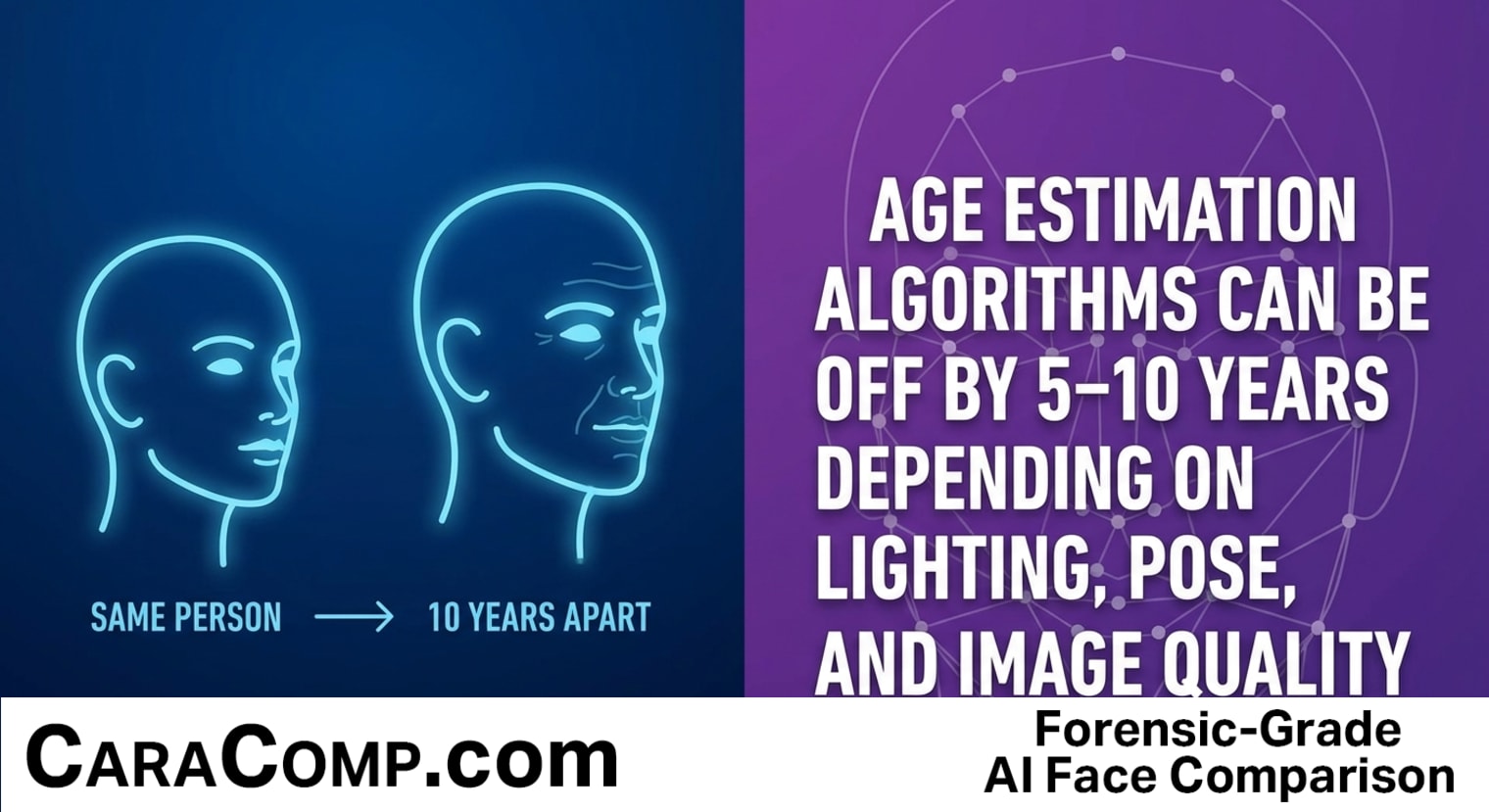
A single desk lamp can turn a 35-year-old suspect into a 45-year-old ghost, and if your investigative workflow doesn't account for that 10-year swing, you’re chasing shadows. For the solo private investigator or the small SIU team, the latest data on age estimation algorithms is a cold shower: lighting isn't just a "variable"—it is a pipeline killer that can make even the most expensive AI tools return garbage data.
The industry is finally admitting what seasoned OSINT professionals have long suspected. Age estimation isn’t one calculation; it’s a collision of four different problems: photography physics, subject presentation, biological aging, and demographic phenotypes. When these factors overlap in a poorly lit surveillance photo, the "mean absolute error" doesn't just nudge—it explodes. For an investigator trying to verify an identity across a decade-old cold case or a fresh insurance fraud claim, relying on a single "age guess" from a software tool is a fast track to a ruined reputation in court.
The implications for the modern investigator are clear:
- The "Single Number" Trap: Algorithms that output a definitive age (e.g., "42") without a confidence interval are misleading. In reality, that number is the peak of a wide, shaky mountain of probability that shifts based on the sun's position.
- Comparison vs. Estimation: While age estimation is prone to a 5–10 year swing due to side-lighting, facial comparison using Euclidean distance analysis remains the gold standard. Investigators must prioritize tools that measure structural geometry over those that guess biological age.
- Demographic Drift: Bias isn't just a buzzword; it's a directional error. Female subjects and specific ethnic phenotypes carry different error profiles that can systematically skew your results if you don't use professional-grade analysis.
At CaraComp, we’ve always maintained that solo PIs shouldn't be priced out of high-fidelity tech just because they don't have a federal budget. You don't need a $2,000-a-year enterprise contract to navigate these pitfalls. You need a tool that understands the difference between a "guess" and a forensic comparison. If you’re still spending three hours manually squinting at grainy photos because you don't trust the "age guesser" tools, it’s time to move to a system that provides court-ready reporting and batch processing at 1/23rd the cost of the big-box alternatives.
Stop betting your license on a shadow. Use technology that measures the face, not the light.
Read the full article on CaraComp: A 10-Year Age Swing from Lighting Alone — What Facial Algorithms Are Really Measuring


Comments
Post a Comment