That "Verifying Your Identity" Spinner Is Doing 7 Things You Never See
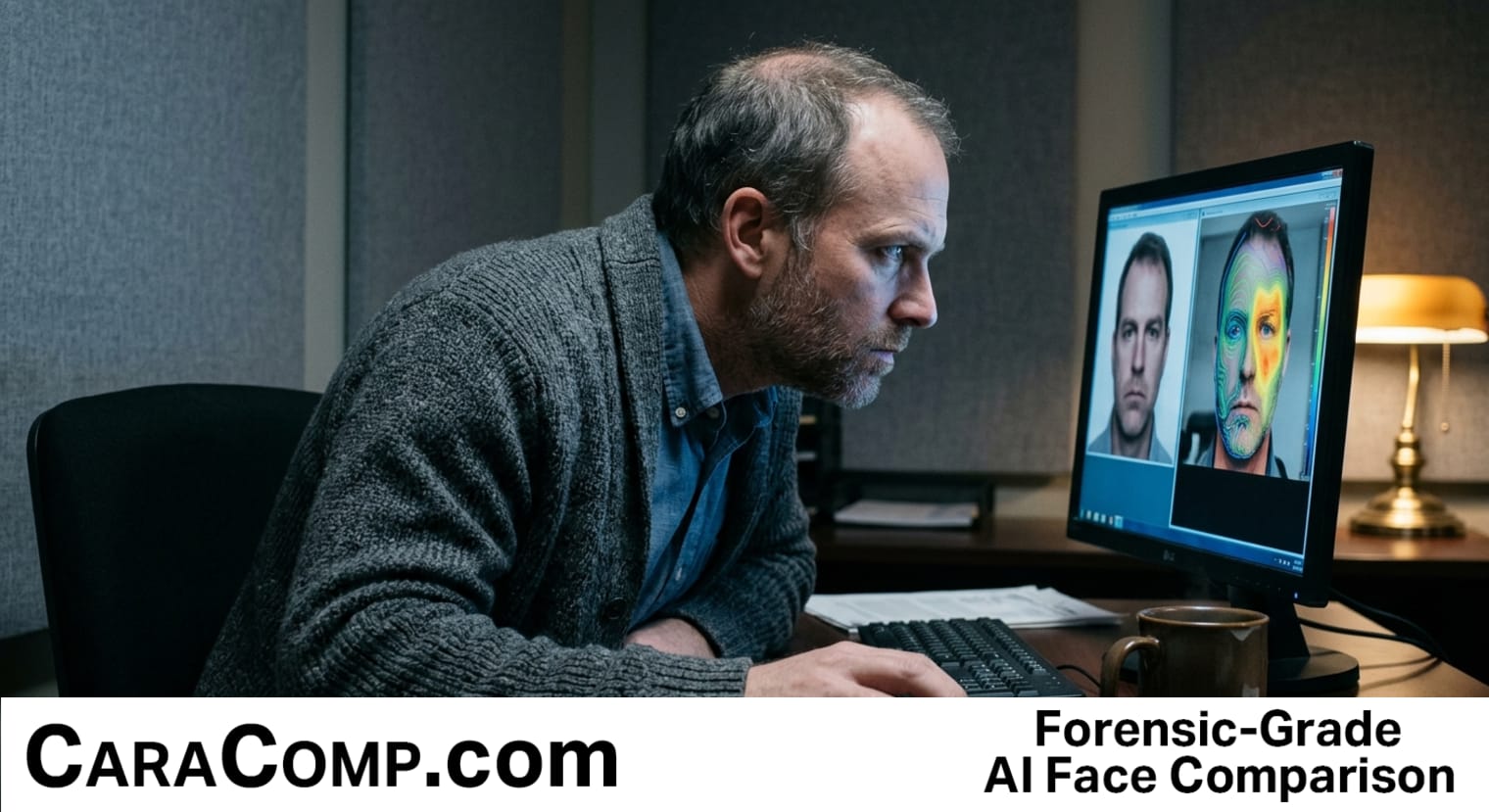
Deepfake-related identity fraud has exploded by over 2,100% in just three years, yet a staggering number of solo investigators and OSINT researchers are still staking their professional reputations on manual photo comparisons and "gut feelings." If you are still eyeballing surveillance footage against a social media profile and calling it a "match," you aren't just behind the curve—you are a liability to your clients.
The industry is moving toward a multi-layered verification reality. While big banks use "spinners" to check liveness and behavioral biometrics, the private investigation sector faces a different hurdle: proving identity across static, often low-quality images. The news that identity verification is becoming a seven-step AI process highlights a massive gap in the investigative market. High-end enterprise tools offer this level of forensic depth but demand five-figure annual contracts, while cheap consumer tools offer "reliability" scores that wouldn't hold up in a parking ticket hearing, let alone a high-stakes fraud case.
At CaraComp, we know that for a field investigator, the "95% match" is often a dangerous illusion. True professional-grade comparison requires Euclidean distance analysis—the same mathematical rigor used by federal agencies—to determine the actual geometric variance between facial features. This isn't about scanning a crowd or invading privacy; it’s about taking the photos already in your case file and applying enterprise-grade math to ensure your results are court-ready.
Key implications for the modern investigator:
- The Death of the Manual Eyeball Test: With deepfakes up 2,100%, human intuition is no longer a valid investigative methodology. If your report doesn't include mathematical distance analysis, it’s just an opinion.
- Forensic Rigor is No Longer an Enterprise Luxury: The technology exists to run side-by-side Euclidean comparisons without a $2,000-a-year subscription. Solo PIs can now access the same "checkpoints" as major institutions.
- Comparison vs. Recognition: The future of the industry lies in comparison—analyzing specific evidence you already own—rather than broad surveillance. This distinction is what keeps your agency ethically and legally sound.
If you are still spending three hours manually comparing faces, you are losing money and risking your credibility. The "spinner" may be invisible, but the math behind it is now the industry standard.
Read the full article on CaraComp: That "Verifying Your Identity" Spinner Is Doing 7 Things You Never See


Comments
Post a Comment