That Hot Stranger Sliding Into Your DMs? Probably 40,000 Lines of Code.
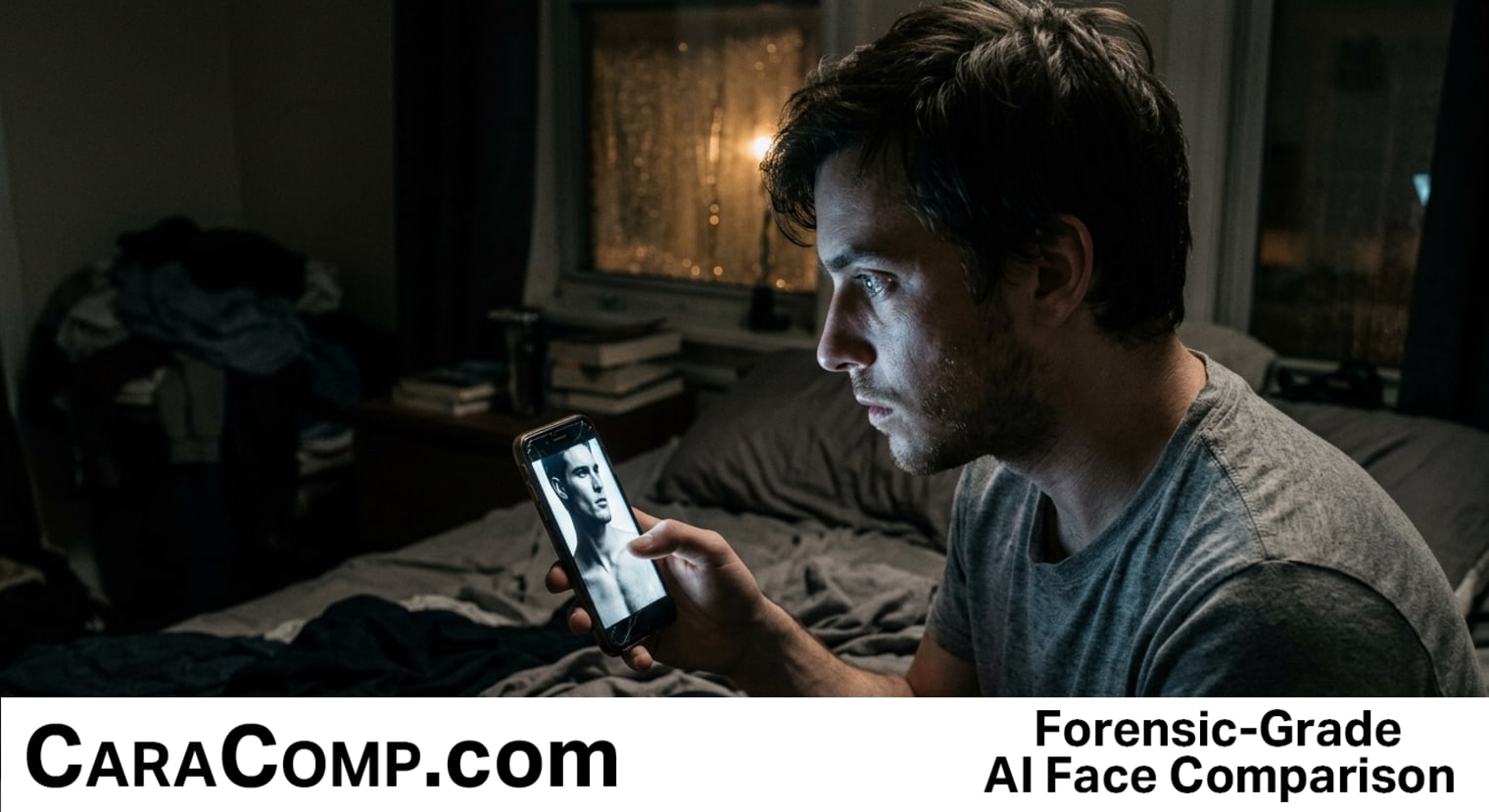
Forty thousand followers later, the internet's latest heartthrob has a secret: he consists entirely of code. The "Derek Lam" phenomenon proves that attraction has been weaponized, but for the private investigator or OSINT professional, it signals a much more dangerous shift in the digital landscape. We are moving past the age of stolen photos into the age of synthetic personhood, where the "person" your client is talking to has no digital footprint because they were born in a GPU yesterday.
For years, the investigative standard for verifying an identity was a simple reverse image search. If the face didn't pop up on a stock photo site or a random Instagram, it was often deemed "legit." That methodology is now officially obsolete. Synthetic faces don't trigger "stolen photo" alarms. When a face is generated via AI, it is unique, passing traditional filters with flying colors while leaving investigators scratching their heads. This is where professional-grade facial comparison must step in to fill the gap.
The implications for modern investigation technology are clear:
- Reverse image search is dead for synthetic identities. Because AI generates unique facial structures, there is no "source" image to find. Investigators must rely on Euclidean distance analysis to compare suspected fake profiles against known assets or multiple accounts used by the same threat actor.
- The "vibe check" is now a liability. Scammers are leveraging silent video and "thirst traps" to bypass voice and lip-sync detection. Professional investigators need tools that can analyze facial geometry side-by-side to prove a pattern of persona-creation that human intuition misses.
- Evidence requires higher standards of proof. In a court or a corporate boardroom, "it looks like a deepfake" won't hold up. Investigators need quantifiable comparison data and professional reporting to justify their findings when a romance scam turns into a multi-million dollar financial hit.
Solo investigators and small firms are currently at a crossroads. The enterprise-level tools used by federal agencies to dissect these synthetic personas often cost upwards of $2,000 a year, leaving the "little guy" to guess or use unreliable consumer tools. But the tech to bridge this gap exists. By focusing on facial comparison—the side-by-side analysis of specific photos—rather than broad-scale scanning, we can reclaim the edge. The future of OSINT isn't just about finding the person; it’s about proving whether the person even exists in the first place.
Read the full article on CaraComp: That Hot Stranger Sliding Into Your DMs? Probably 40,000 Lines of Code.


Comments
Post a Comment