Deepfakes Fool You With the Uniform, Not the Face
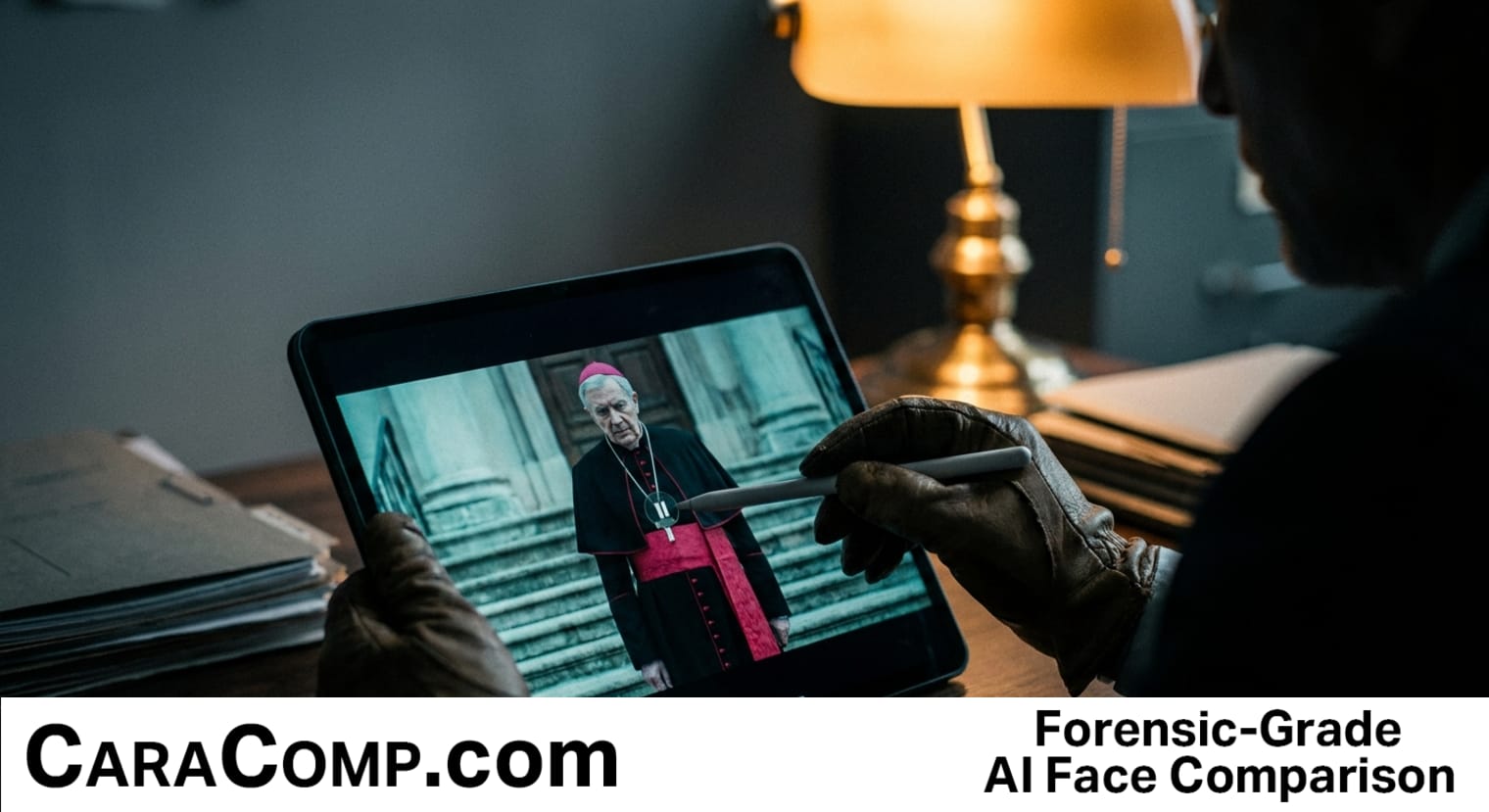
Your brain is hardwired to trust a uniform, and that is exactly why the next generation of deepfakes will successfully bypass your instincts. Recent analysis of deepfake bishops and clergy members reveals a startling reality: the "authority heuristic" is far more powerful than facial realism. When an investigator views a video, the setting, the clothing, and the institutional symbols do the heavy lifting of persuasion long before the observer ever scrutinizes the facial geometry.
For the solo private investigator or OSINT professional, this is a professional liability of the highest order. Human accuracy in detecting audiovisual deepfakes hovers at a dismal 65.64%. This means that relying on manual "eyeballing" is essentially a coin flip that could cost you your reputation. In the investigative field, we cannot afford to be fooled by the costume. We need objective, data-driven analysis that ignores the cassock or the badge and focuses strictly on the math of the face.
This is where the distinction between facial recognition and facial comparison becomes critical. While the public fears mass scanning and surveillance, the sharp investigator understands that comparison—specifically Euclidean distance analysis—is the only way to strip away the "trust environment" of a deepfake. By comparing your case photos against suspicious media using enterprise-grade algorithms, you move from subjective guessing to objective verification. For too long, this caliber of tech was locked behind five-figure enterprise contracts, leaving small firms to rely on unreliable consumer tools or, worse, their own fallible eyes.
Key Implications for Investigators:
- Context is a distraction: Deepfakers use "authority cues" like uniforms and official backgrounds to suppress your critical thinking. Professional facial comparison tools are essential to isolate the person from the propaganda.
- Manual verification is a risk: With human detection rates failing to hit even 70%, staking a case on manual visual comparison is increasingly indefensible in a professional or court setting.
- The Tech Gap is Closing: Solo investigators no longer need $2,000 annual budgets to access the same Euclidean distance analysis used by federal agencies; affordable comparison tools are now the baseline for any credible fraud or identity investigation.
We are entering a phase where the "visual proof" provided by a client or a witness is no longer sufficient. To stay ahead of the curve, investigators must transition from being observers to being analysts. The uniform might fool the public, but it shouldn't fool the professional. Objective facial comparison is no longer a luxury; it is the only way to ensure your evidence holds up when the context is fabricated.
Read the full article on CaraComp: Deepfakes Fool You With the Uniform, Not the Face


Comments
Post a Comment